
How Professionals Approach Greasy Carpet Marks
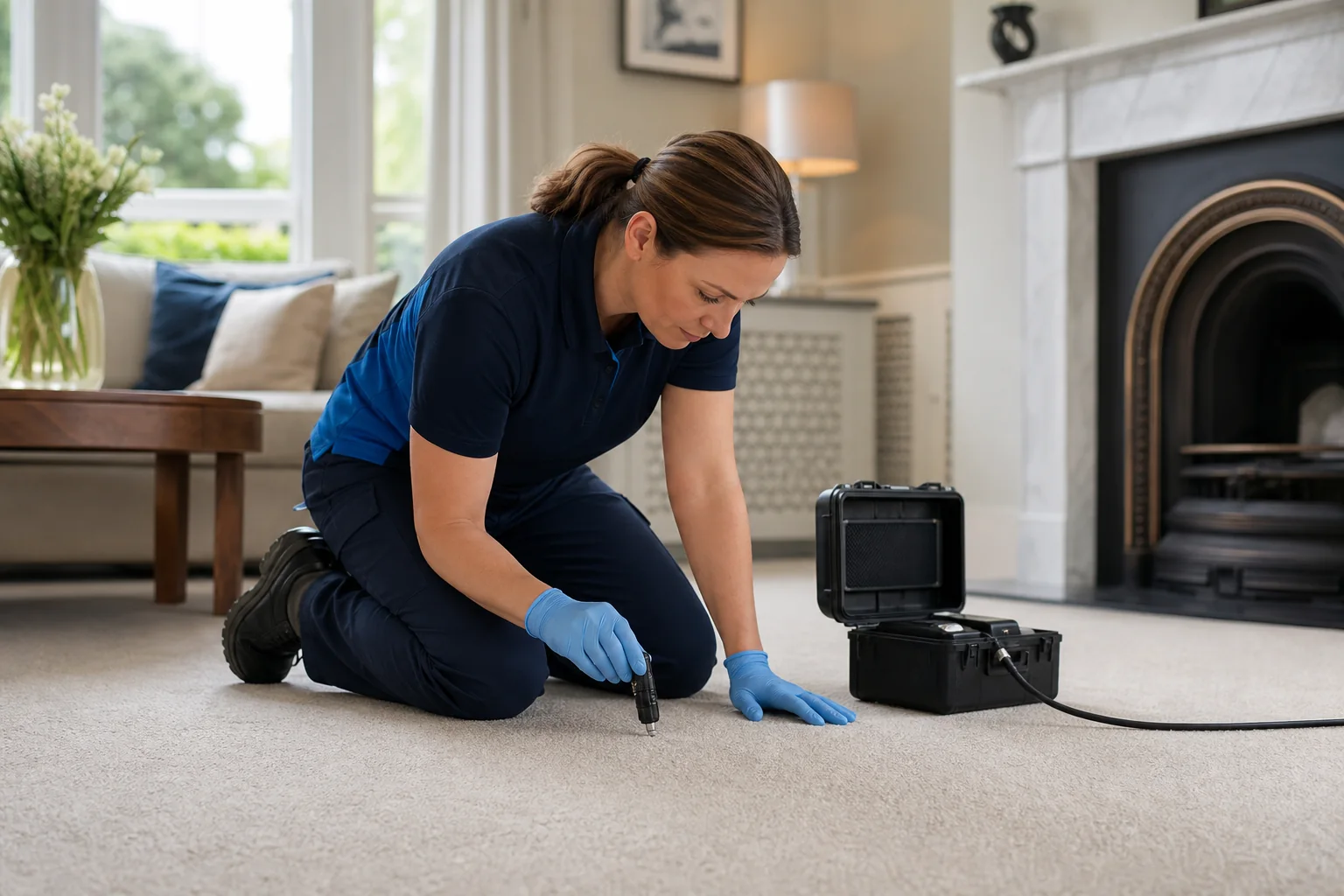
Direct answer: A greasy carpet mark needs a different assessment from a water-based drink spill. Oil can bind soil to yarn, and rubbing or flooding may enlarge the patch. A cleaner should identify the likely source, test the material and choose a targeted treatment that can be removed from the carpet without leaving a residue.
Recognise the source before choosing a treatment
Cooking oil, lotion, shoe polish, food fat and machine lubricant can all leave dark marks, but they are not identical. A patch beside a kitchen doorway might also be ordinary traffic soil held by oily footwear. Note when the mark appeared and what may have touched it. If it came from a mechanical source, stop the leak or move the item safely before treating the carpet. Cleaning the face yarn while a chair castor or tool continues to deposit grease will give only a temporary improvement.
The appearance may change as fine grit clings to the oily area. A small clear spill can become a dark patch over time, making it look larger than the original incident. Compare its feel with a sheltered part of the carpet without rubbing it. A sticky or tacky texture is useful information for the cleaner, but not proof of one particular chemical. An old detergent residue can attract soil in a similar way. Explain any previous home products so the technician can consider both possibilities.
Why water alone may not be enough
Oil does not mix with plain water in the way a simple soluble drink residue might. Pouring water over a greasy patch can spread it through the pile and into backing without removing it. A suitable professional product may help release oil so it can be extracted or otherwise removed, but the choice depends on the fibre, dyes, finish and backing. The product must be used at the instructed concentration and removed appropriately; leaving a sticky cleaner behind can accelerate re-soiling.
Avoid a universal solvent recipe from the internet. Some solvents can affect adhesives, finishes or dyes and may pose ventilation or fire concerns if misused. A cleaner should test the carpet and follow product safety directions. WoolSafe advises care with solvents and ventilation and stresses pre-testing of products on fine fibres. The point is not that every greasy mark needs a strong solvent; it is that the stain and carpet need a controlled, compatible process.
What an on-site inspection should include
The technician should check the patch's size, depth and position. A mark at a seam or stair edge may limit agitation. A grease trail beneath a sofa could have come from a furniture foot, lubricant or body oils transferred by repeated contact. The surrounding pile may be flattened or generally soiled, so a targeted treatment can leave a lighter island. Ask the cleaner how they will judge the result against the wider carpet, not just against the darkest centimetre.
Carpet fibre and construction are central. Synthetic fibres can differ in how oils cling and how pile recovers after traffic. Wool and blends may require gentler chemistry and moisture control. A retailer label or spare sample can help identify the material, but the cleaner should still inspect actual condition. Previous cleaning may have left residue or changed the mark's outline. A small test can indicate whether the proposed process lifts soil without unacceptable colour or texture change.
Safe first response at home
For a fresh food spill, lift any solid material carefully without smearing it. Blot accessible oil with plain white absorbent material; do not scrub. Keep people from tracking the substance into a larger area. Avoid adding washing-up liquid, bleach, hot water or a powder without checking the carpet maker's care advice. A little product left behind can make the patch more attractive to new dirt. If the source is unknown or the material is delicate, stop after the initial gentle action and ask a professional.
Tell the cleaner what you did and when. A photograph taken shortly after the incident can show the original footprint, while a later photograph shows how the mark developed. That difference may reveal soil accumulation around an oily residue. The related guide on what information helps a stain assessment sets out the details worth recording. A precise history can prevent the wrong treatment more effectively than an extra bottle of cleaner.
What improvement can look like
An appropriate clean may lighten the area considerably, yet a shadow can remain if oil penetrated deeply, attracted old grit or coincides with pile wear. A pale result is not always success either: dye or fibre damage can create a conspicuous lighter patch. Ask the technician to explain which part appears removable and to stop when further agitation or chemistry would risk the carpet. A controlled partial improvement may be preferable to a widened mark.
Check the area once dry. A new tacky feel or rapid darkening can suggest residue or continuing soil transfer and should be reported. Keep furniture off the damp section as advised so a wooden or metal foot does not create a different mark. If an appliance or furniture fitting caused the grease, address that source before expecting the carpet to stay clean. Routine vacuuming can then remove dry soil before it clings to any remaining trace.
Scope the work honestly
Take account of routine contact points. A grease mark beside a dining chair can recur if hands or food regularly touch the same fabric or carpet edge; a dark patch near a sofa may reflect footwear, skincare products and ordinary soil together. The maintenance plan should address the source that supplies new oil as well as the existing mark. Clean protective mats or adjusted furniture use may help where practical, but they should not create a slip or trip hazard. A cleaner can remove suitable residue, yet the mark will re-form if the same deposit continues unchecked.
If a targeted treatment leaves a clean island, discuss whether the surrounding area needs ordinary cleaning. That is a question of visual balance, not evidence that the first treatment failed. Compare after the carpet is dry and the pile has settled. A technician should distinguish a remaining oily feel from a darker band caused by worn yarn. These details make a follow-up specific enough to act on.
Say whether the aim is to remove one mark, clean an entire room or treat a traffic route that contains several greasy patches. The carpet cleaning service can assess both the spot and its context; the price guide is a starting point for cost. Ask what targeted treatment is included and whether the surrounding carpet will also be cleaned to reduce contrast. A quote based only on a small close-up may miss the material, access and general soil level.
There is no single stain product that reliably removes every oil from every carpet. The useful professional service is a sequence of identifying the source, testing a safe method, removing released soil and checking the dry result. If the patch is actually colour change or abrasion, that sequence should reveal the limitation before more aggressive treatment is attempted.