
How Pet Odour Treatment Differs from General Cleaning
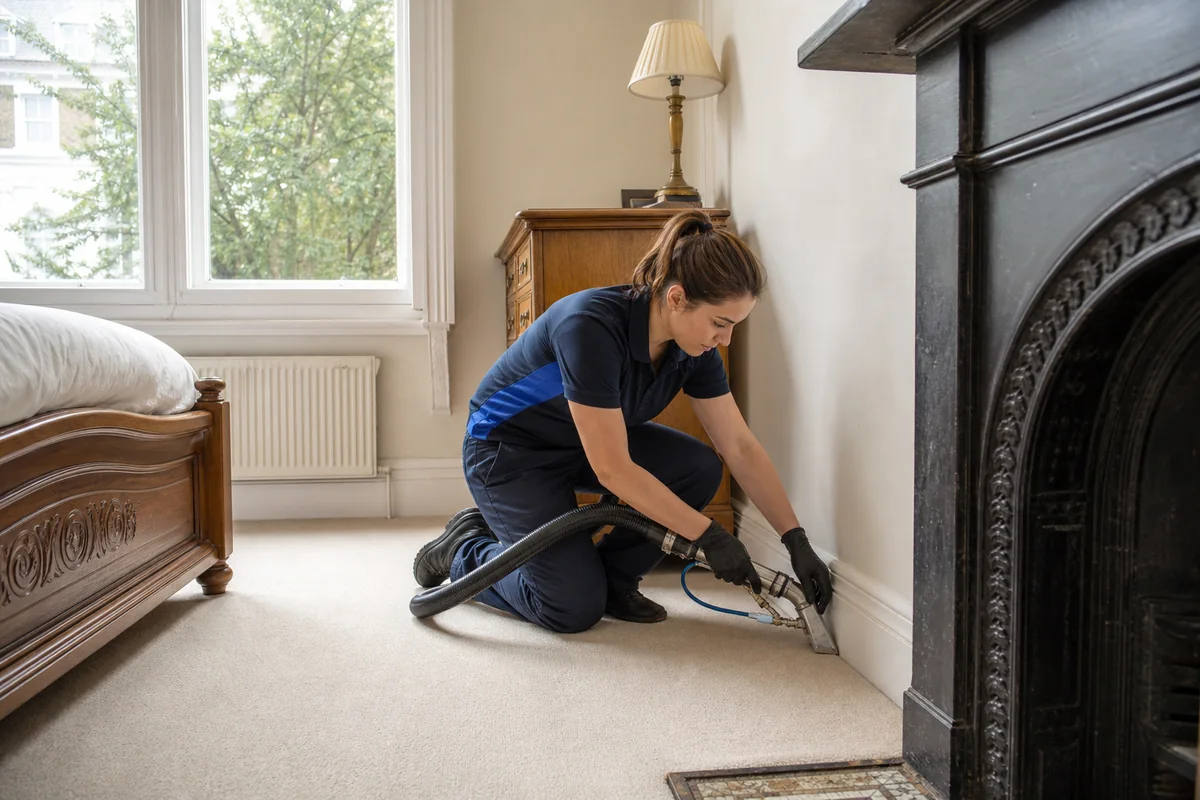
Pet odour work starts with locating the source, not choosing a stronger fragrance. Ordinary carpet cleaning is designed to remove general soil from accessible fibres. A pet accident can pass through the pile, reach the backing and sometimes enter the underlay or floor beneath. If the visible patch is cleaned while the deeper source remains, the carpet may look better yet smell again when room humidity changes. The decision is therefore about where contamination travelled and which parts of the construction can actually be treated.
Start with the history of the accident
Tell the cleaner whether the source was urine, faeces, vomit or an unidentified mark. These are different problems. A fresh, small urine accident on a stain-resistant carpet may remain close to the surface; a repeated accident in one corner can penetrate layers and spread beyond the visible edge. The size of a mark is not a reliable map of the affected area. Note the date, how long the carpet stayed wet, whether it was blotted promptly and whether the pet has returned to the same spot. A continuing smell in a dry room is especially important to report.
List every product already used. A household cleaner, deodoriser, vinegar mixture or enzyme product may have changed the colour or left residues. That history affects testing and the choice of professional treatment. Avoid adding another product immediately before the visit simply to improve the smell. Mixing treatments can make the source harder to identify and can affect carpet dyes or backing. The Carpet and Rug Institute’s pet urine bulletin notes that old accidents may cause several kinds of damage and that complete odour removal is unlikely if the urine itself cannot be removed.
General soil and an odour source call for different scopes
Routine cleaning can make a carpet look brighter by removing tracked-in dust, oily soil and suitable marks from the pile. That is valuable work, but it does not establish that liquid below the carpet has been reached. An odour treatment may require a more detailed inspection, targeted application and an explicit discussion of backing and underlay. The cleaner should explain whether the proposed service treats the face yarn only, reaches an accessible backing, or calls for lifting the carpet and assessing the pad or subfloor. A service described simply as a “deep clean” gives too little information for a persistent accident.
The distinction also matters for price. Treating a single fresh spot is not the same task as investigating a bedroom corner with repeated accidents and a damaged underlay. A quotation should state what has been observed, what remains uncertain and which additional work would require approval. Our carpet cleaning service can assess the carpet, while the price guide provides starting figures rather than a promise about specialist odour work. Give the company the number and position of affected areas when asking for a quote.
What a careful assessment should establish
An inspection begins with the carpet’s fibre, backing, seams, age and care guidance. The cleaner needs to look for discolouration, weak bonding, dampness and earlier treatment. Pet urine can affect carpet backing and seams, so forceful wet cleaning of a damaged area may create a second problem. A small test can help check colour stability and likely visible improvement, although it cannot prove the condition of every hidden layer. Where there is serious or long-standing contamination, the carpet may need to be lifted by someone qualified to do that work so the underlay and floor can be inspected.
Ask how the cleaner proposes to identify the affected boundary. A visible spot, a smell noticed at floor level and a previous owner’s description may point to different locations. Some inspection tools can assist, but none should be presented as a perfect map of contamination. The practical objective is to form a sensible treatment area without saturating sound carpet unnecessarily. The same inspection should distinguish an odour caused by a pet accident from a damp building issue, an old spill or a product residue. A deodoriser cannot solve a water leak.
Why a pleasant smell at handover is not the final result
Fragrance can temporarily cover an odour, particularly while the treated carpet is still damp. Judge the result after the carpet and any treated layers have dried under normal room conditions. Keep the area ventilated according to the technician’s advice, and keep pets away until the cleaner says the surface is ready for use. If the smell returns, record when it happens: after rain, in a warm room, when the carpet is pressed, or continuously. This information helps decide whether a hidden source remains rather than encouraging another general clean without a diagnosis.
There are limits to what treatment can accomplish. Some older urine stains can permanently alter dye or fibre; cleaning cannot reverse that change. If underlay is saturated or degraded, replacement may be more sensible than repeated deodorising. If the floor beneath has absorbed contamination, a separate assessment may be needed. The cleaner should say clearly when a treatment is an attempt to improve the situation and when it cannot offer a guarantee. Our guide to what causes carpet odours explains other sources worth ruling out before booking repeat work.
A useful plan before and after the appointment
Before the visit, photograph the whole area and each affected spot. Mark the position of any repeated accident without applying tape directly to the pile. Share the carpet’s care label if available, and make access to the perimeter clear. Do not pull up fitted carpet yourself if you could damage it or expose sharp grippers. If the accident is very recent, gently blot accessible moisture with a clean white absorbent cloth; avoid grinding the liquid into the fibres. A large contaminated spill, especially one that has reached the floor, deserves prompt professional advice.
After treatment, keep the written scope and note what was actually done. Check the appearance when dry, but also assess the smell over the following days in ordinary room conditions. A remaining mark does not always mean a remaining odour source, and a clean-looking patch does not prove that a deeper source has gone. If there is an unexpected new colour change, dampness or returning smell, contact the cleaner with the original photographs and treatment date before applying anything else. The best outcome is an honest account of the source, the layers reached and the improvement that can be maintained.