
How Often Should High-Traffic Carpet Areas Be Vacuumed?
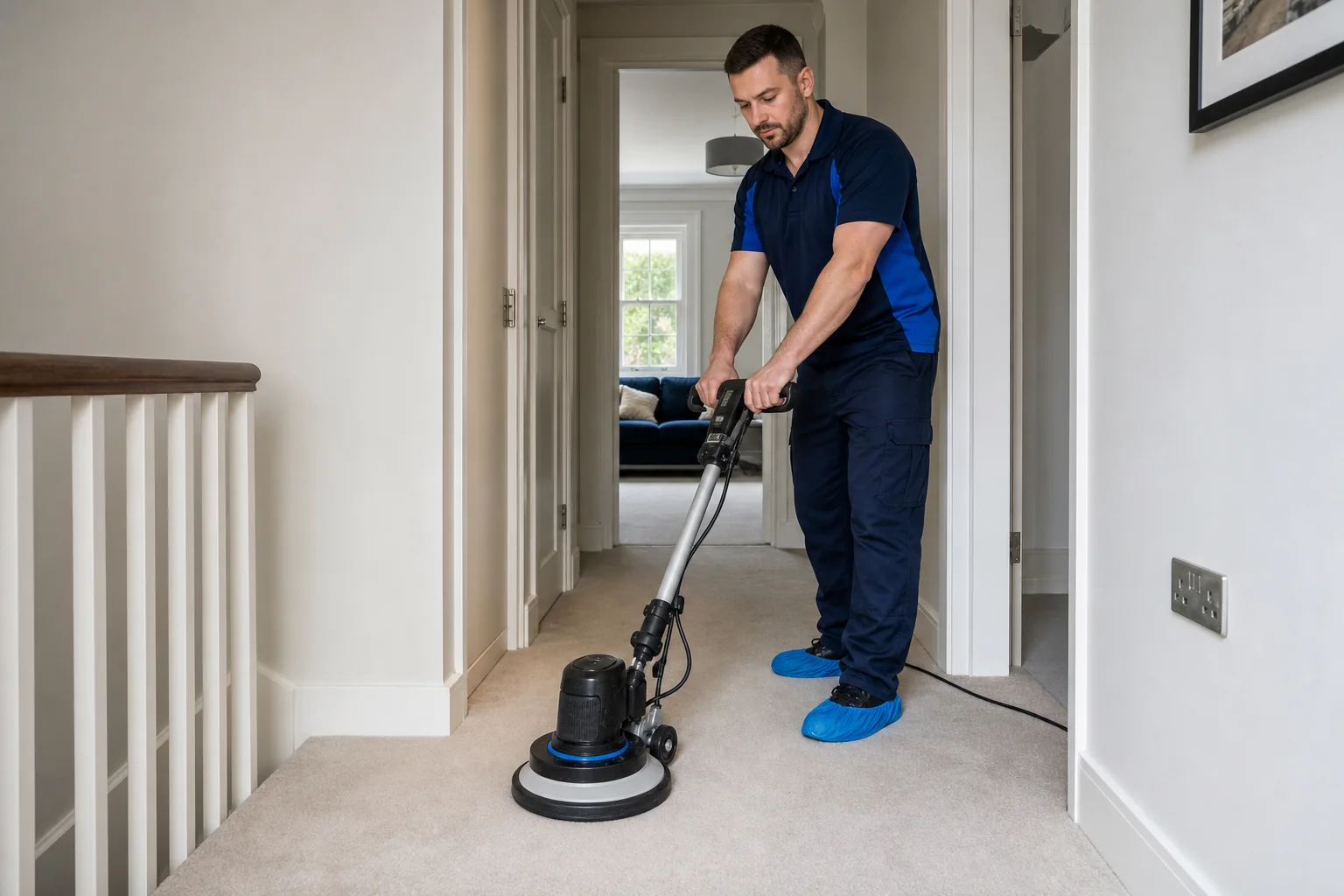
Direct answer: Vacuum a high-traffic carpet route as often as needed to remove dry soil before it is pressed into the pile. The right frequency depends on foot traffic, tracked-in grit, occupants, matting and carpet construction. Inspect the route and adjust the routine instead of relying on one number for every home.
Define the high-traffic area first
The path between a front door and living room, the foot of a stair, a hallway turning point and the space beside a frequently used chair can receive much more pressure than the rest of a room. Watch where people actually walk rather than treating an entire floor as equally busy. A sheltered bedroom corner may need less attention, while the centre of a narrow landing may need more. This difference allows a realistic routine: concentrate effort where grit enters and where repeated steps will grind it into the yarn.
If the route is already dark, vacuuming is still worthwhile, but do not assume dry soil explains all of the appearance. Pile can be compressed or abraded, and direction can change how it reflects light. Compare texture with a protected patch and view the route from both ends. A clean vacuum can remove grit without restoring worn fibres. The guide to carpet traffic lanes explains how professionals separate these effects.
Use a frequency that responds to soil
An entrance carpet that collects visible grit every day may justify daily attention, while another home with effective mats and less traffic may not. WoolSafe's maintenance guidance describes daily attention for regularly trafficked areas in some settings and lower frequency for minimally used areas. That is a useful principle, not a universal household prescription. Start with a schedule you can maintain, then look at the vacuum's collected soil and the carpet's feel. If grit remains underfoot before the next planned session, increase attention to that route.
Weather changes the load. Rain, leaves, road grit and muddy shoes can make an entrance route dirtier in winter than in a dry week. Visitors, children and pets can change traffic suddenly. After a gathering, an extra vacuum may be more valuable than waiting for the next fixed day. A mat may capture much of the soil, but it must be cleaned or replaced when full. The carpet beneath it should stay dry and free of trapped grit.
Match the vacuum head to the pile
Strong agitation is not always better. A rotating brush can catch a loose loop, long pile or damaged seam. Follow the carpet maker's care advice and adjust height or use a suitable suction head. A wool loop runner, synthetic cut-pile hallway and delicate stair carpet may need different settings even in one property. If the machine drags, snags or leaves obvious yarn damage, stop and reassess the head. A vacuum that preserves the pile is more useful than one that appears to lift it temporarily while abrading it.
Move the machine slowly enough for airflow to pick up dry soil. Overlapping passes along and across a busy route can help, as long as the method suits the carpet. Empty the dust container or bag and maintain filters when suction falls. A full machine can make extra passes ineffective. Keep the head clean so it does not transfer grease or grit from another floor. None of these steps requires pressing the nozzle forcefully into the carpet.
Pay attention to edges and stairs
Grit can collect at skirting and at the front of stair treads. Use a suitable attachment for edges rather than dragging a large powered head against a loose seam. A stair carpet needs safe footing and an accessible power lead; do not stretch across several steps with a heavy machine. If a tread edge has lifted or catches shoes, ask a fitter to assess it before further vacuuming or cleaning. The purpose of frequent maintenance is to protect the carpet, not create a fall or a pulled loop.
Under heavy furniture, accessible dust still matters, but do not strain yourself to move a bookcase or sofa alone. Plan occasional safe access to the edges and tell a professional cleaner which areas remain covered. A protected patch can look darker or taller when furniture is moved because it escaped sunlight and traffic. That contrast should not be mistaken automatically for a vacuuming failure.
When vacuuming alone is not enough
Vacuuming addresses mainly dry loose soil. Oily traffic deposits, sticky residues and some old spills may remain attached to fibres. If the path still looks grey after a consistent routine, ask whether professional cleaning is due. The Carpet and Rug Institute's residential standard treats routine vacuuming and periodic professional cleaning as complementary. A cleaner can assess whether the visible difference is soil, pile wear or both, and choose a method for the actual material.
Do not try to compensate for a stubborn dark route with a strong wet spot product every week. It may leave residue and enlarge the contrast. Describe the route, its age and your vacuum routine when booking. Our carpet cleaning service can inspect it; the price guide offers starting information. If the main issue is a new spill, follow a substance-specific response rather than treating it as general traffic soil.
Check whether the schedule is working
You can make this review more objective with a simple record. Note when the entrance mat was cleaned, when the route was vacuumed and whether visible grit appeared before the next session. Photographs in consistent light can show a slow trend, though pile direction may exaggerate differences. If a child starts using a new path through the room or a pet begins shedding more, adjust the route and frequency. The schedule should follow the soil source and traffic pattern rather than an old household habit.
If vacuuming appears to raise dust or leaves a smell, check the machine's bag, filters and maintenance instructions. A vacuum in poor condition can move soil rather than remove it effectively. The answer is not necessarily to make more passes; it may be to restore suction or use the correct attachment. A suitable machine used consistently is the foundation of dry-soil control between professional visits.
After several weeks, inspect the route under similar light. Is loose grit less noticeable? Does the entrance mat still catch soil? Does the machine collect a normal amount without pulling fibres? A schedule that looks good on paper but leaves visible grit between sessions needs adjustment. A route that stays dark despite little loose soil may need professional assessment for oily deposits or wear, not simply more frequent vacuuming.
Keep the plan simple enough to continue. It can be a brief pass through the hallway on busy days and a more complete room clean at a lower frequency. Change it when the household's use changes. The effective interval is the one that removes dry particles before repeated steps work them deeper, while respecting the carpet's pile and the people doing the work.