
Cleaning Around Mattress Seams and Tufts
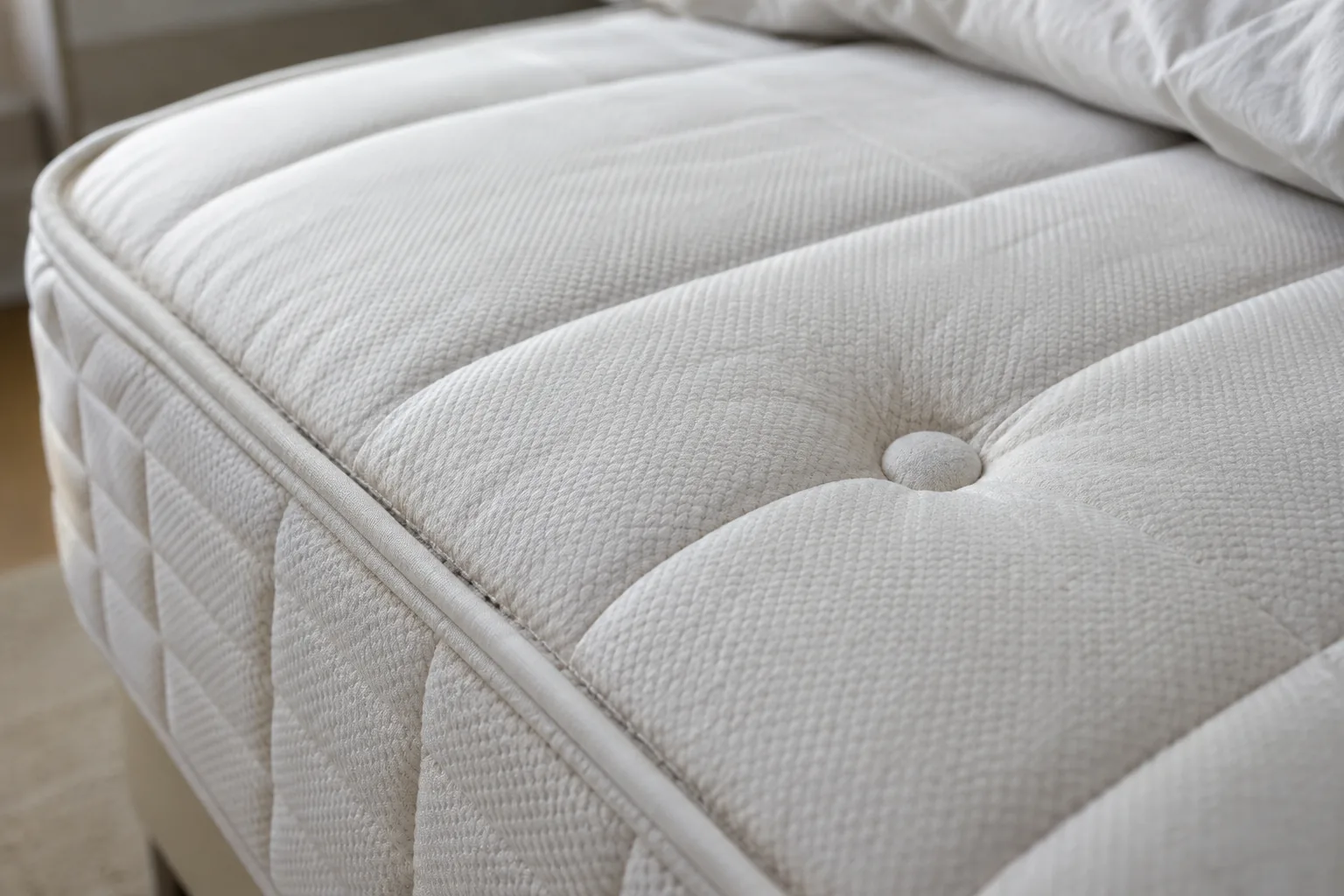
Direct answer: Mattress seams, quilting and tufts trap dust but can also hold moisture. Remove loose soil gently and protect weak stitching. Wet treatment around these details should follow the maker’s care instructions and a drying plan.
A mattress is not a flat slab of fabric. Its top can have deep quilting, stitched channels, piping, handles, buttons or tufts that hold layers in place. Those features catch dust and make a simple surface pass less effective. They also contain folds and internal materials that should not be soaked or pulled. Good cleaning around them balances access with protection of the construction.
This article focuses on the edges, seams and tufted points that are easy to overlook. It does not claim that vacuuming or surface treatment can remove every particle or contaminant from inside a mattress. The maker’s care instructions and the mattress’s condition determine what is suitable.
Inspect before reaching into a crease
Strip the bed and look over the top, sides and underside you can safely access. Use good light to identify loose stitching, damaged piping, a detached button or a tear near a handle. Note where dust has collected: it may sit in a recessed quilt line, around a tuft or along the border where the mattress meets the bed base. Photograph any damage before cleaning. A weak seam should be pointed out to a professional because suction or a brush could make it worse.
Do not lift a heavy mattress alone simply to inspect its underside. Ask for help if it needs moving, and follow the maker’s guidance on whether it can be turned or rotated. Some mattresses are one-sided; others have handles that are intended for positioning rather than carrying the full weight. Damage caused by pulling a handle can be more serious than dust in a seam.
Look for stains as well as dry dust. A small mark in an open top panel may be approachable, while a stain centred on a tuft can have travelled into multiple layers. Brown discolouration around a metal button or fastener may have a different cause from ordinary body soil. Avoid treating every dark point with the same spray. Record the history of spills, previous products and any odour.
Work through seams and tufts carefully
- Inspect seams, buttons and border piping for damage.
- Vacuum accessible creases gently if the maker permits it.
- Avoid pouring cleaner into tuft holes or quilt channels.
- Check the detailed areas for dampness before remaking the bed.
Dry soil first, with a gentle tool
If the maker permits vacuuming, use a clean upholstery attachment suited to the fabric. Work slowly along quilting channels and border seams so loose dust is lifted rather than pushed further into a crevice. Keep the nozzle from catching loose threads or pulling a tuft. A narrow tool may help in an accessible gap, but sharp plastic edges can scrape ticking. Test the feel of the tool on a sound, inconspicuous area first.
Avoid an aggressive rotating brush on delicate ticking or raised embroidery. It can fuzz the surface and abrade thread. A tufted mattress is not a carpet whose pile can be scrubbed hard. A soft brush can loosen dry debris where permitted, but use only light pressure and collect what is released. If the fabric starts to pill, fray or shed, stop.
Take particular care at the border. Piping may enclose a cord and multiple fabric layers. Repeated pressure can wear its outer wrap, while excessive moisture can sit inside it. If the mattress has a removable cover, read its label before unzipping. A zip may be present for manufacture and may not mean the cover can be washed or safely removed by the owner.
Why wet treatment is harder around tufts
A tuft often joins outer fabric to deeper layers. Liquid applied at its surface may follow thread or openings inward. A stitched channel can also hold more product than a smooth panel. The visible top may dry first, leaving damp material beneath. If a stain lies in this detail, repeated spraying can spread the mark and make drying harder.
A returning line at the edge of a treated area is covered separately in the guide to mattress tide marks. If a tuft is already loose, describe it through the contact page before booking so the cleaner can plan around that weakness.
Strong cleaners can affect dyes and finishes, while a rough cloth can pull fibres from the edge of a button. Do not pour a product into a crevice simply because it is dark. If a fresh spill reaches a tuft, blot the surrounding surface gently with a clean white absorbent cloth. Remove bedding and protect the bed base. Ask for help if the liquid was large enough to reach deep padding or the underside.
Heat is not a shortcut. A hot iron, high hairdryer or heater pressed close to the surface may change foam, adhesive or ticking without drying inner layers. Airflow and time may help for a modest permitted treatment, but the amount of liquid and construction matter. Never cover a mattress while its seams still feel damp.
Questions for a professional cleaner
Ask how they will address dust in recessed areas and what they will do around weak stitching. The cleaner should inspect the mattress model or label, note material and visible damage, and explain whether a proposed treatment reaches only the ticking or also any accessible padding. A controlled low-moisture method may be appropriate for some mattresses, but that phrase alone does not guarantee safety. The plan should include extraction or removal of product and a realistic drying arrangement.
Our mattress cleaning service can assess seams, tufting and visible stains before recommending treatment. If the mattress is heavily contaminated internally, a surface clean will not be a substitute for addressing that inner problem. If a tuft or border has detached, a repair or replacement decision may be needed first.
Ask whether the cleaner will document pre-existing wear. A professional process can make a hidden split more visible when soil is removed, and weak stitching may limit how thoroughly a detail can be treated. Agreeing those limits before work helps set a fair expectation.
Check the result after drying
After treatment, leave the mattress uncovered until it is fully dry according to the technician’s guidance. Check the deep quilt lines, border and underside you can safely reach; they may dry at different rates. A seam that still feels cool or damp needs more time and airflow. A returning odour or mark can suggest that something beneath the visible surface was not resolved. Tell the cleaner rather than repeatedly applying more product yourself.
Vacuuming the details regularly within the maker’s guidance can limit future build-up. A washable protector between sheets and mattress can reduce direct soiling, but it should be cleaned and dried separately according to its label. Do not place it over a damp mattress. The purpose of careful seam work is to clean what is safely accessible while preserving the stitching and inner structure that make the bed usable.
If a decorative border remains pressed against a solid bed frame, arrange access before the appointment so the cleaner can see it. Move bedside items and bedding, but do not strain yourself trying to lift or fold a heavy mattress. Knowing who can safely help reposition it may be more valuable than arriving with extra cleaning products.
Frequently asked questions
Can a vacuum nozzle pull out a mattress tuft?
A loose tuft or weak thread can be caught by a tool. Use gentle suction and stop if the detail starts to move.
Why does a seam stay dark after the top dries?
It contains folded layers that may dry at a different rate, or it may hold residue or an old mark. Allow full drying before judging it.