
Food Grease on Dining Chair Seats
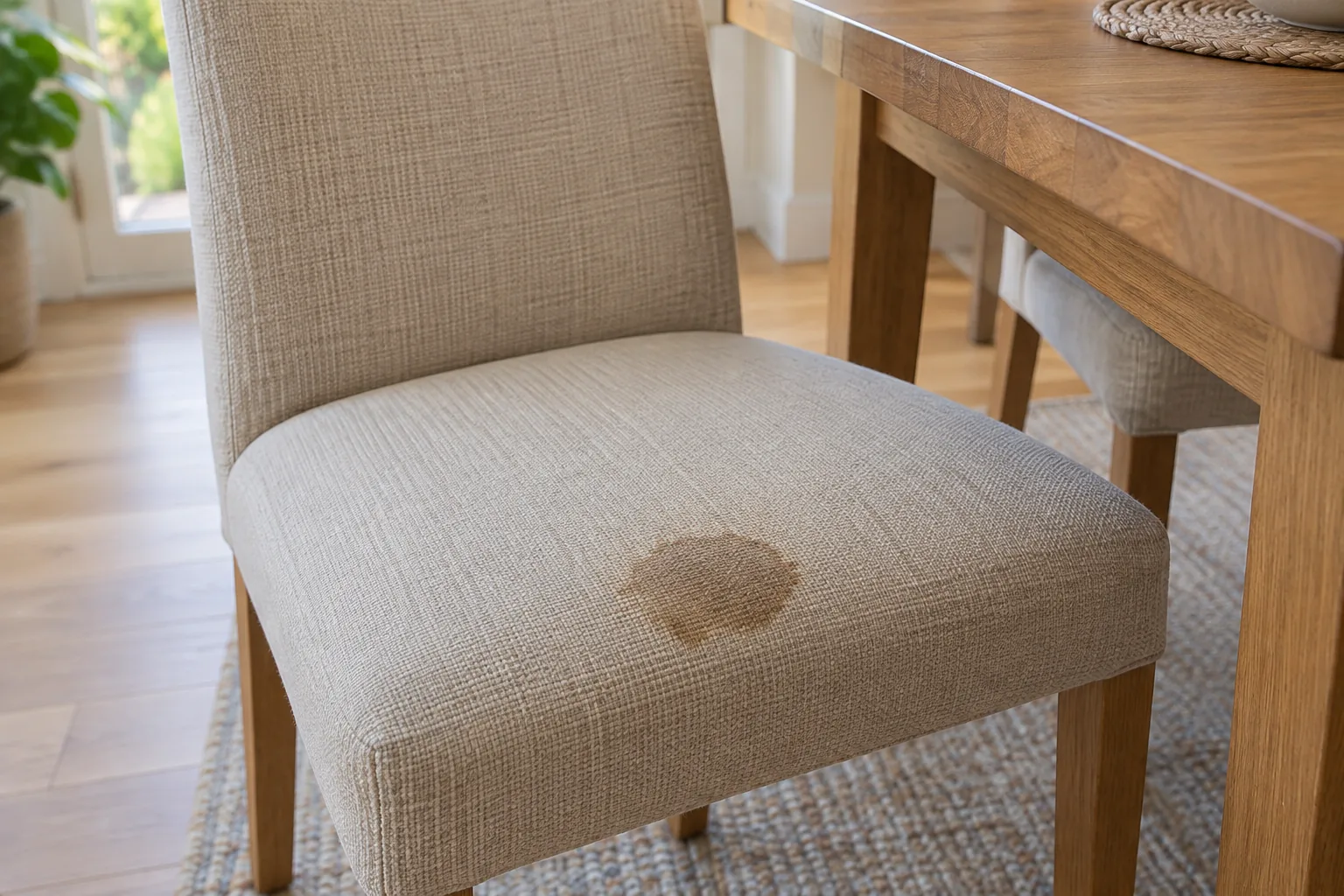
Direct answer: Lift loose food and blot a fresh greasy spill on a dining chair without rubbing. Check the chair label before applying any product. Oil, colour from sauce and general seat soil may need different treatment, and complete removal is uncertain.
An upholstered dining chair is likely to meet cooking oil, butter, sauce or food dropped from a plate. A small mark can be surprisingly visible because the padded seat is often a pale, unbroken panel. Grease behaves differently from a clear drink: it may cling to fibres, spread under pressure and leave a darker translucent patch. The food may also contain dye or protein, so one spill can have several components.
Quick, gentle action can prevent the mark spreading, but a promise of complete removal would be unfair. The seat fabric, its backing, the age of the stain and any earlier home treatment affect the outcome. This article gives practical first steps and explains when a professional assessment is preferable to repeated spotting.
Separate loose food from the absorbed mark
If solid food remains, lift it carefully with the edge of a spoon or a dull tool. Work from the outside towards the centre without scraping the fabric. Do not press a greasy piece deeper into the padding. Then blot any wet residue with a clean white absorbent cloth. Press and lift; rubbing can spread oil and roughen the upholstery surface.
Notice exactly what fell. Plain oil, a cream sauce, melted cheese and a tomato-based meal differ in colour and composition. If the mark is warm, allow the area to cool rather than applying an untested liquid immediately. Take a photograph and note whether the spill reached the chair back, a seam or the timber frame. Grease near a stitched edge can be harder to treat evenly because multiple fabric layers are involved.
Do not pour water onto the mark in an attempt to dilute oil. Water may carry other food components outward and leave a ring while doing little to remove the greasy part. Avoid sprinkling a household powder without considering the upholstery; a fine powder can lodge in the weave or under a button. If the chair maker gives specific first-aid instructions for oil, follow those instead of a generic recipe.
Immediate steps for a food spill
- Lift solid food carefully without scraping the seat.
- Blot with a clean white cloth from the outside inward.
- Record the food and check the chair cover and frame materials.
- Seek an upholstery assessment before using solvents or soaking the pad.
Check the chair construction and label
Some dining chairs have removable washable covers, some have a fixed fabric seat, and some use a separate upholstered pad that can be lifted off a timber frame. A hidden label or product page should tell you what the maker permits. A zip or Velcro fastening is not proof that a cover can safely go into a washing machine. The padding, piping and backing may react differently from the face cloth.
If grease has reached piping or a stitched edge, the guide to upholstery piping and trims explains why that detail needs separate care. List the number of matching chairs and include photographs through the contact page before requesting a quote.
Examine the seat in good light. Is the mark a small oily patch on otherwise clean fabric, or is the chair generally grey with contact soil? A spot clean can create a pale halo if the surrounding panel is dirty. Compare other chairs from the same set: if one chair is cleaned thoroughly, colour differences caused by age and light exposure may become obvious. That does not mean the mark should be ignored, but it affects how a professional may plan the work.
If the chair has a loose seam, fraying edge or weak fastening, document it before treatment. An aggressive brush may worsen the damage. A padded dining chair often has thinner upholstery than a sofa cushion, so uncontrolled moisture can reach the base quickly. If the chair includes wood, a wet treatment can also affect the frame finish or joint area.
What not to apply by guesswork
Washing-up liquid, solvent, citrus cleaner, bicarbonate and a hot iron are often recommended for grease online. None is a universal answer for every upholstered chair. A detergent may leave sticky residue; a solvent may affect dyes, adhesive or finish; heat may set other food components or damage synthetic fibres. Bleach can remove the chair’s original colour. A second mark from a home product can make later professional treatment more difficult.
If the manufacturer’s instructions allow a particular spot method, test it exactly as directed in a hidden area and use the least amount required. A successful hidden test does not guarantee a perfect result in a worn, sunlit seat centre. Stop if colour transfers to the cloth, the material changes texture or a ring grows. The aim is to avoid turning a small dark patch into a larger damaged zone.
Do not keep cleaning while the upholstery is damp because the temporarily dark fabric may hide what is happening. Allow any permitted test to dry fully before judging it. Make a record of products and quantities used. A professional needs this history to choose compatible next steps.
How a cleaner may approach the problem
The cleaner should identify the fibre, colour stability and construction, then consider the food composition and previous attempts. A greasy residue may call for a suitable targeted treatment, but that choice belongs after testing and care-label review. It may be followed by controlled removal across a wider seat panel to avoid an obvious clean patch. Stronger chemistry is not always safer or more effective, particularly on an unknown or delicate covering.
Ask what result is realistic. A fresh, shallow mark may improve substantially. An older mark that has reached the padding or combined with a coloured sauce may leave a trace. Repeated extraction cannot necessarily draw every component out of a cushion. Our upholstery cleaning service can assess dining chairs as well as larger upholstered pieces and explain treatment limits before work.
Where several matching chairs are affected, discuss the set as a whole. One seat may be stained, another generally soiled, and a third worn at the front edge. Treating them identically may not produce identical results. Photographs and a clear record of existing wear make the outcome easier to judge fairly.
Keep dining chairs easier to maintain
Vacuum crumbs and loose dust regularly with a suitable attachment if the maker permits it. Crumbs at a seat seam can become greasy dirt after repeated meals. For a removable approved cover, follow the label’s laundering and drying instructions; avoid assuming a hot wash is needed for every food spot. A washable seat pad or cover may help in a household with frequent spills, provided its dyes are stable and it does not slide unsafely.
Consider how the chairs are used. A chair directly beside a cooker or in a children’s craft area may face more oil than a chair used only for meals. Simple barriers, prompt blotting and the correct care information are more dependable than a succession of aggressive stain removers. If an old mark remains after suitable cleaning, decide whether its appearance justifies a replacement cover or professional reupholstery rather than repeatedly treating the same weakened fabric.