
Sofa Pilling or Dirt? How to Tell the Difference
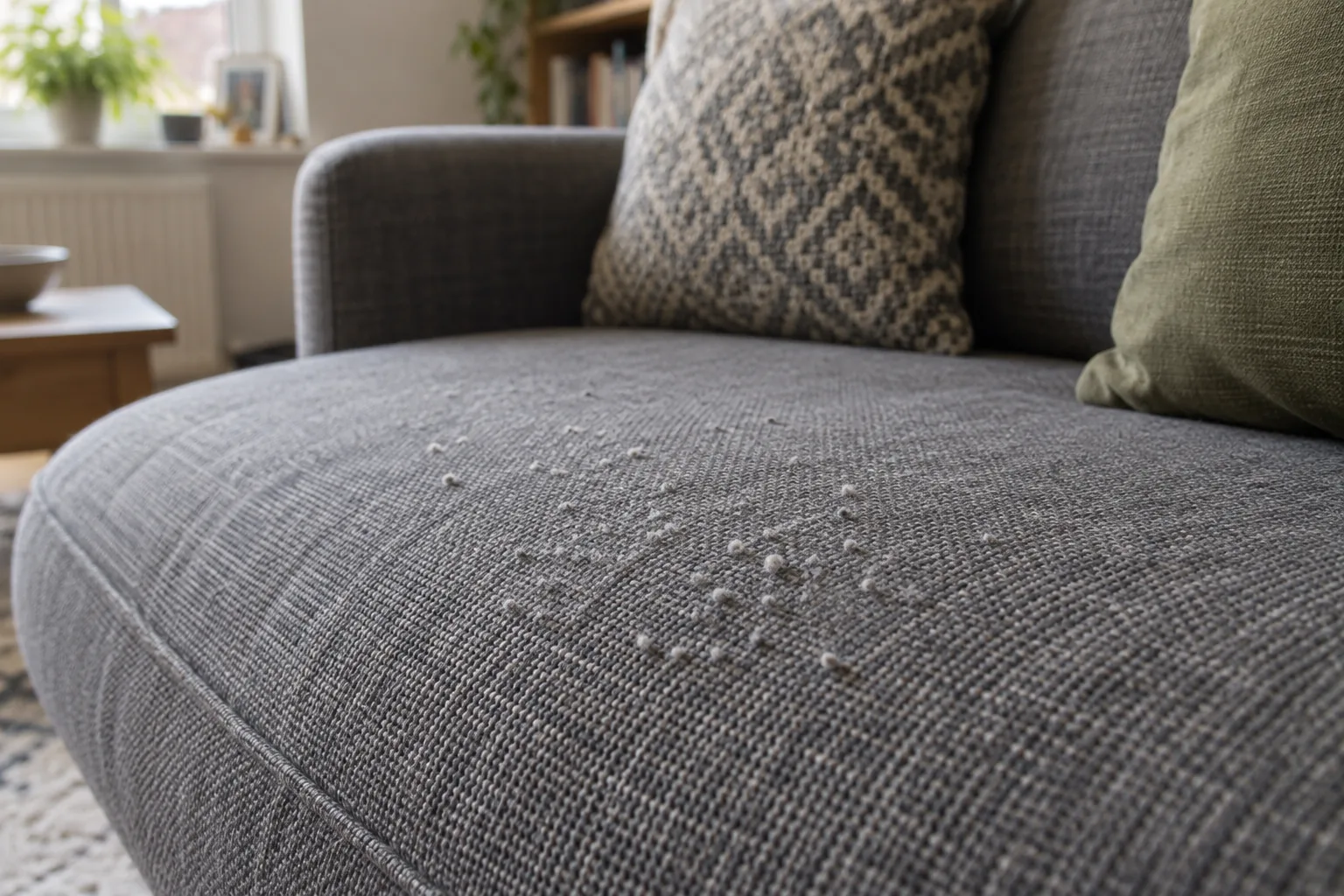
Tiny bobbles on a sofa cushion can make an otherwise clean seat look neglected. They are often described as dirt, but they may be pills: small balls of fibre formed as loose strands work out of the yarn and tangle with use. Dirt can lodge around them, making the surface look darker still. If you treat pilling as a stain, a wet cleaner may improve the surrounding soil while leaving the bobbles in place.
Direct answer: Attached little fibre knots are pilling, while loose dust and crumbs are soil. Both can occur together. Cleaning can remove appropriate soil, but pills usually need a separate fabric-care decision and should never be pulled out by hand.
The distinction is useful before you buy a cleaning product or question the result of a professional clean. Pilling is a physical change to the surface. Cleaning can remove appropriate soil, while the removal of pills is a separate fabric-care decision with its own risks. It is also worth checking whether the marks are actually crumbs, pet hair or a roughened finish before reaching for a fabric shaver.
Look at the surface in good light
Use daylight or a bright diffuse lamp, and look across the fabric from the side. Pills often stand slightly proud of the weave as individual little knots. A fingertip may feel them as rough specks, though pressing hard can damage a delicate yarn. Loose crumbs or lint may shift when brushed very gently or lifted by a suitable upholstery vacuum attachment. Attached pills remain connected to the upholstery by small fibres.
Compare a busy seat with a sheltered panel on the same sofa. Pilling often appears where clothing rubs or people shift their weight: seat fronts, arms and favourite sitting places. A uniform grey film over an entire panel suggests dust or general soiling may also be present. A smooth shiny area or thinning fabric points toward abrasion rather than simple pilling. One sofa can show all three conditions, so an either-or diagnosis may be too simple.
Colour can mislead. Dark clothing fibres can become entangled in pale sofa pills and make them look like black dots. A vacuum may remove the loose colour but not the fibre knot holding it. Photograph the area close-up and at normal viewing distance. That record helps you see whether cleaning changes the broad appearance even if the close-up texture remains.
Why pills form and why cleaning has limits
Everyday friction draws loose fibres to the surface. As they rub against each other, they can curl into small balls. The behaviour depends on the yarn and fabric construction, not just how often you clean the sofa. A new sofa can pill during early use, and older furniture can pill where friction continues. Manufacturer guidance matters because some fabrics are designed to be maintained with a particular method and others have a surface that should not be shaved.
Where small knots look darker because they hold contact soil, the guide to why sofa arms soil faster helps explain the separate role of skin oils and dust. A close photograph sent through the contact page can help show whether a cleaning quote should address soil, pilling or both.
Pills are not dissolved by water, shampoo or a stronger stain remover. A wet process may release soil around them, but it cannot reverse the yarn change. Aggressive brushing can pull more fibres loose, creating additional fuzz. Repeated attempts to scrub away every visible knot risk thinning the face fabric, especially along a worn seat edge. A clean sofa can therefore still have a visibly bobbled surface.
Soil can be relevant. Fine dust and body oils can cling to a roughened area, making it appear more marked than a smooth panel. Removing that soil may make the sofa look fresher, even though pills remain. A cleaner should explain the difference beforehand so the expected outcome is clear. If the fabric is already thin or threads are exposed, they may advise against intensive work at that spot.
Check the surface in four moves
- Inspect the cushion from the side in good light.
- Use a suitable gentle vacuum pass to see which particles are loose.
- Check the furniture maker’s advice before considering a pill remover.
- Discuss any thin, frayed or shiny areas before professional cleaning.
Safe routine care before considering removal
Check the furniture maker’s care advice and the upholstery label. Vacuum the surface gently with an upholstery attachment that does not catch the weave. Work in the direction that puts the least strain on the fabric. Keep suction and brushing appropriate to the material. If the nozzle snags a loop or lifts a thread, stop rather than tugging it free. Do not pull individual pills with your fingers; that can draw more yarn out of the fabric.
Many retailers offer guidance on using a fabric pill remover, but this is not a universal instruction for every sofa. A shaver can cut the face yarn if pressed too hard or used over a raised seam. Scissors can also slip into the base cloth. Ask the maker what tool, if any, is appropriate for the exact fabric. If permitted, a careful trial in an inconspicuous area is more informative than treating the whole sofa at once. Remove only surface knots, never an attached loop that is part of the weave.
Avoid using adhesive tape aggressively. It can pull fibres from a soft finish and leave adhesive behind. Sticky rollers may be suitable for loose lint on some durable fabrics, but they will not safely solve every pilling problem. The aim of routine care is to remove dust and loose debris with little friction, not to force a worn surface to look new.
When professional cleaning is useful
If the sofa also has widespread soil, a professional clean may be worthwhile. The cleaner should inspect the fabric type, worn areas, seams and previous treatments, then discuss what can be cleaned and what is physical wear. A test can help judge colour stability and the response to a proposed method. It cannot promise that pills will disappear. Our sofa cleaning service can assess the condition and outline realistic outcomes before treatment.
It helps to show the cleaner the exact area you are concerned about. Ask them to distinguish loose surface dirt from attached fibre knots. A quote for cleaning should not quietly imply that mechanical fabric restoration is included. If pill removal is offered, ask how it would be done, whether the manufacturer supports the method, and what risk it poses to an already thin panel.
After cleaning, let the upholstery dry fully before comparing photographs. Damp fabric can look darker and flatter than dry fabric. Look at the whole seat from a normal distance as well as close up. If the broad colour improves but the bobbles persist, that does not necessarily mean soil was left behind; it may mean the remaining feature is pilling.
Reduce friction and decide when repair makes sense
Regular gentle vacuuming limits the dust held by the roughened surface. A washable throw may protect a high-contact spot if its own dye is stable and it is removed for laundering. Choose a covering that does not abrade the sofa as it moves. Rotating loose cushions where the maker permits may distribute wear, but not every cushion can be flipped or swapped. Follow the manufacturer’s construction guidance rather than forcing a fixed cushion into a different position.
If the surface is threadbare, splitting at seams or developing holes, cleaning and pill removal are unlikely to solve the main problem. Upholstery repair, a replacement cover or a furniture warranty discussion may be more useful. Keep the original purchase and care information if the sofa is relatively new. The practical goal is a sofa that is clean and serviceable, with honest expectations about the fabric’s condition.
Frequently asked questions
Does a professional sofa clean remove pilling?
A clean can remove soil around pills, but it does not dissolve attached fibre knots. Mechanical removal may be a separate service if the fabric allows it.
Can a fabric shaver damage upholstery?
Yes. Pressing too hard or using it over a seam can cut face yarn. Follow the maker’s guidance for the exact fabric.