
Spot Cleaning or a Full Carpet Clean?
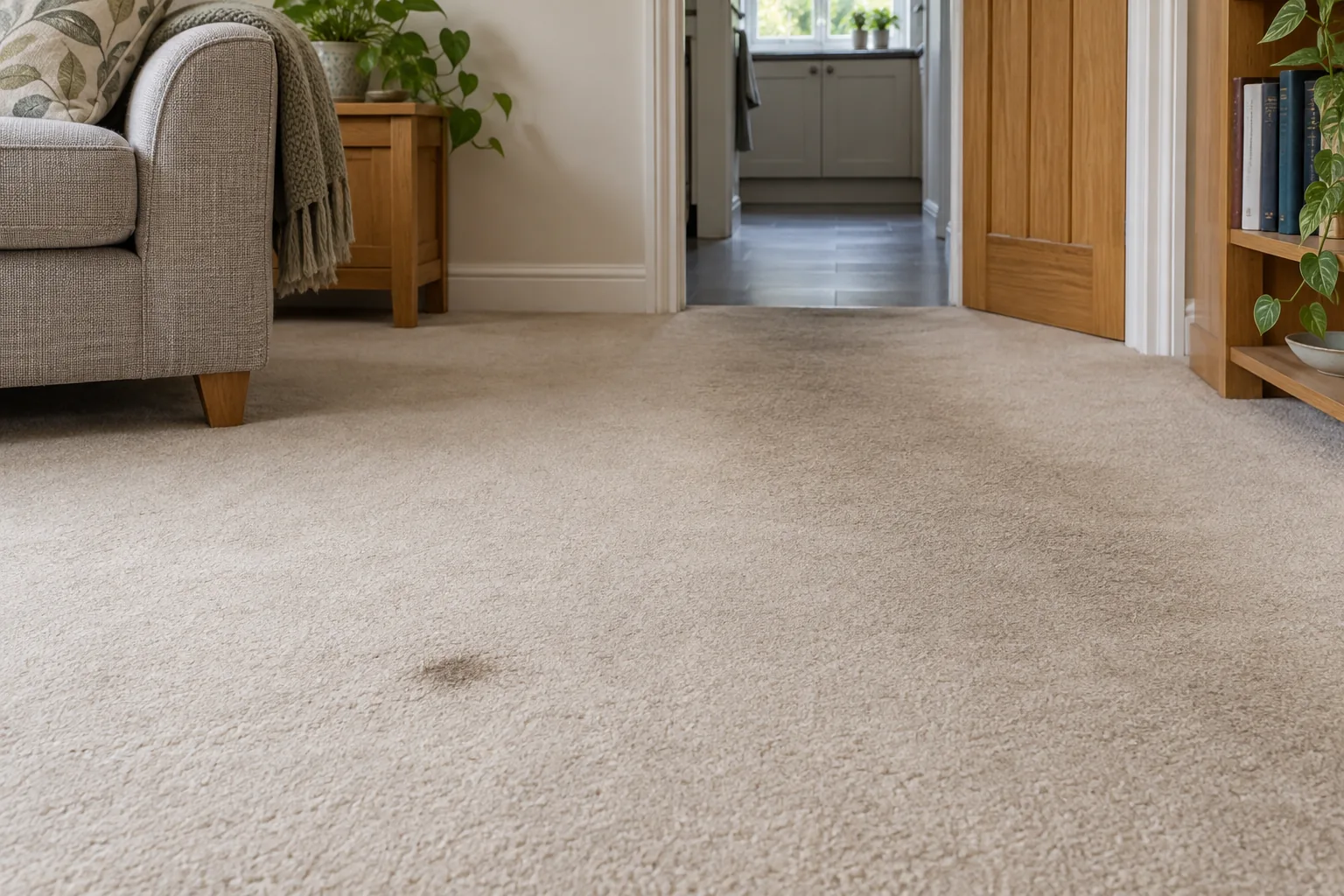
A single mark near the sofa does not always justify cleaning an entire room. Equally, repeatedly treating little patches across a dull carpet may leave a patchwork appearance while embedded soil remains. The right scope depends on what caused the mark, how widely soil has spread, the carpet’s material and how noticeable a cleaned boundary may be.
Spot treatment and full-room cleaning are related but different tasks. A spot treatment targets a particular substance or discolouration. A full clean addresses broader accumulated soil across the carpet, with specific spots assessed separately. Neither method can reverse wear, missing dye or structural damage. Deciding the scope first helps you compare quotes and judge the result fairly.
Start with the size and history of the problem
Ask whether there was one recent event. A small drink spill with a known time and location is a candidate for prompt, targeted attention. If the surrounding carpet is otherwise clean, a whole-room clean may add little. Blot a fresh liquid with a clean white absorbent cloth, follow the manufacturer’s care guidance and avoid rubbing. If a product is needed, it should be suitable for the carpet and tested as directed.
A mark in a busy traffic route is different. It may combine a spill with accumulated grit, body oils and flattened pile. Treating one visible point may remove the spill but leave a broad dull band. If several spots have appeared over months and the carpet looks generally grey, a wider clean may give a more consistent result. Regular vacuuming still matters because dry grit should be removed before wet work.
Note the age of the carpet and when it was last cleaned. Age alone does not determine the answer, but older, more used pile may show a sharp contrast when only one square is cleaned. Conversely, a fairly new carpet may carry a stubborn isolated stain that needs specialised attention rather than a general wash. The substance and fibre are more informative than the calendar date alone.
Check whether the mark is actually removable soil
Before choosing the size of the clean, use the guides to flattened pile versus dirt and persistent underlay odour if either matches what you can see or smell.
Look at the patch from different angles and compare its texture with a protected section. A light mark that stays pale may be colour loss. A dark-and-light shape that reverses with viewing angle may be pile shading. A permanently flattened area may remain visible after soil is removed. A snag, open seam or delaminated backing is a repair concern. None is solved simply by cleaning a larger area.
Describe the mark accurately when asking for a quote. “A rusty orange spot under a metal chair foot” gives a technician more to work with than “dirty carpet”. Mention earlier products, leaks and odours. A targeted test can help establish whether a treatment is suitable and what result is realistic. The cleaner may recommend no further chemistry if the visible feature is damage rather than soil.
If an odour returns after surface cleaning, consider whether a source lies in backing or underlay. A full-room clean is unlikely to reach it simply because a larger area is treated. Hidden moisture or contamination calls for assessment of the affected layers first. Do not use the size of the room as a substitute for locating the cause.
The visible edge of a spot clean
Even a well-executed spot clean can look like a lighter island on a carpet that is generally soiled. The cleaned patch may reveal the carpet’s original colour while the surrounding pile remains grey. If the room is bright and the mark sits in an open central area, the contrast may be more noticeable than in a shaded corner. Discuss that possibility before booking a small treatment.
The boundary can also appear because a product left residue, moisture moved old soil outward or the pile was groomed in a different direction. These are different causes. A cleaner should inspect whether the edge is a true stain, a soil contrast or a temporary drying effect. Judge the final appearance once the patch is fully dry and under the usual room lighting.
If several spots sit close together, treating each separately may take as much work as cleaning the whole accessible area. Ask for both scopes and what each includes. The Carpet and Rug Institute’s residential cleaning standard treats vacuuming, prompt spot removal and periodic deep cleaning as complementary parts of care. One does not permanently replace the others.
When a full clean makes more sense
Consider a full-room clean when soil is spread through the traffic paths, many small marks are present, the room looks generally dull, or a spot clean would leave an obvious contrast. The cleaner should still identify special stains before applying a general method. Wax, gum, rust or dye loss can require separate decisions and may not respond to the same process used for ordinary soil.
If heavy furniture will remain in place, agree which parts of the room are included. “Full room” usually means accessible carpet, not the floor beneath an immovable bookcase. If one half of a large open-plan carpet is cleaned and the other remains soiled, a visible boundary may appear. Ask about a coherent treatment area and how furniture will be protected during drying.
Our carpet cleaning service can be scoped around a single room or a wider job after inspection. The published price guide offers starting information; ask what is included for the actual area and whether targeted stain treatment is separate. A clear quote should describe the limits of both a small spot visit and a full clean.
Practical steps for the customer
- Identify the mark’s source, size and age.
- Compare texture and colour with a protected area.
- Consider whether a clean patch will contrast.
- Ask for a quote that describes both options.
A practical four-question check
First, is the problem local and recent, with the source known? If yes, safe prompt spot care may be enough. Second, does the surrounding carpet show broad traffic soil or several older marks? If yes, ask about a full-room clean. Third, is there a material risk such as unstable colour, natural backing, weak seams or previous chemicals? If yes, inspection and testing come before either method. Fourth, would a clean patch look conspicuous against the rest of the room? If yes, discuss a wider treatment area or accept that contrast may remain.
There is also a fifth consideration when the mark is not soil at all. A bleach spot, torn loop, deep odour source or water-damaged underlay needs a repair or source assessment. Paying for repeated spot cleaning or a whole-room wash can postpone the decision without changing the underlying problem.
After any treatment, follow the drying instructions and compare under similar light. Keep the details of products used and any limitations the cleaner identified. That record helps with later maintenance and prevents the same patch receiving an incompatible series of treatments.
The scope should match the cause and the spread of soil. A focused treatment respects a genuinely isolated mark; a full clean addresses a room that has accumulated soil more generally. Neither should be sold as a cure for damaged carpet.
Frequently asked questions
Is spot cleaning always cheaper?
Call-out and treatment needs affect the actual quote.
Can a full clean fix a permanent mark?
No. It cannot restore lost dye or worn fibres.