
What Causes Ripples in Fitted Carpet After Cleaning?
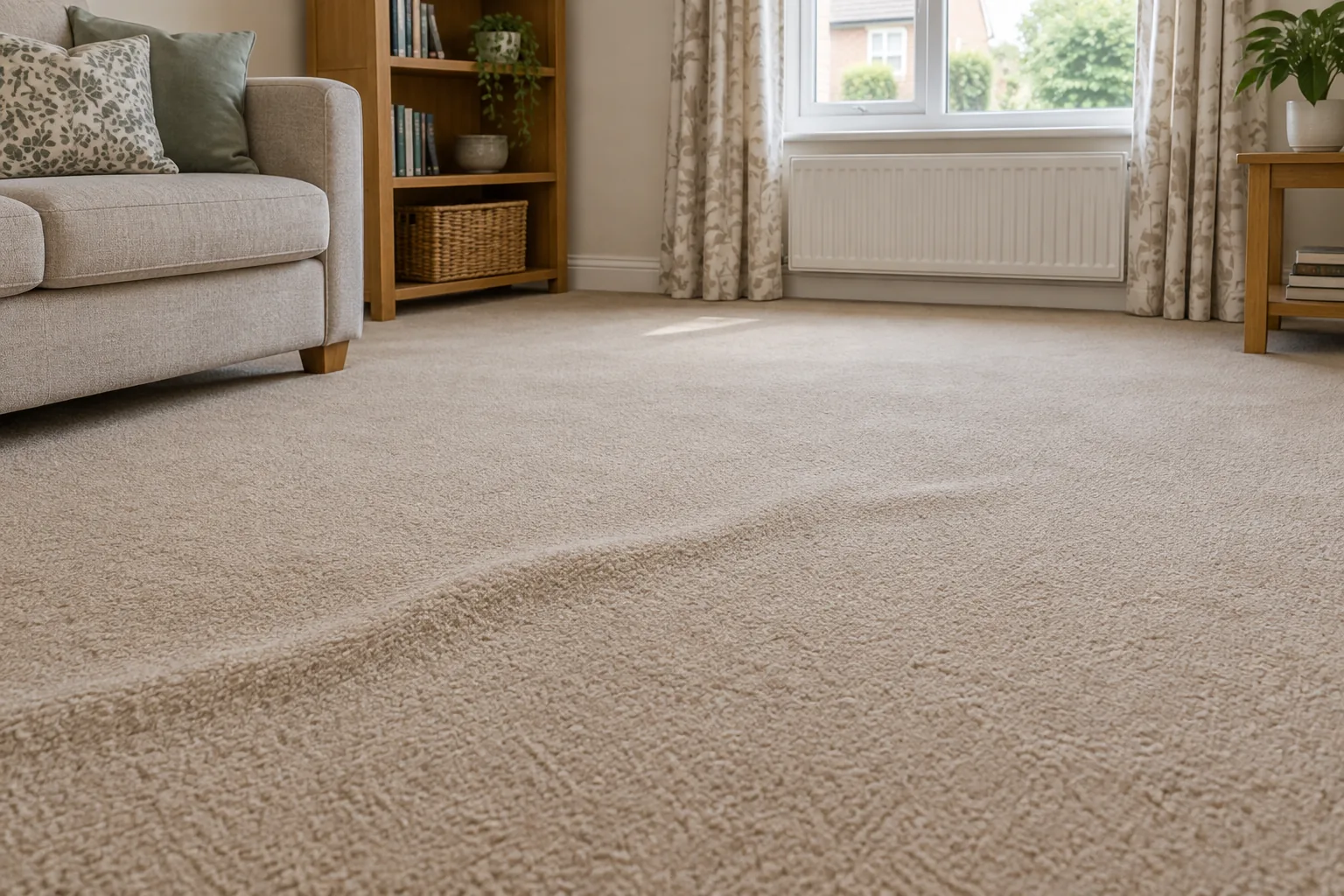
Direct answer: Ripples may reflect loose fitting, underlay movement or moisture. Allow normal drying, document the shape and ask the cleaner or a fitter to assess a persistent or hazardous ridge.
A fitted carpet that looked flat in the morning can show a low ridge or a series of waves after cleaning. The timing naturally raises concern, but the appearance does not identify a single cause. Moisture and room humidity can make some wrinkles more visible temporarily. A carpet that was already loose may also show its lack of tension more clearly after treatment. Backing condition, underlay and installation all affect what happens next.
The safest first step is to allow the carpet to dry under the cleaner’s aftercare advice and record the change without pulling at it. A persistent ridge, a loose edge or a seam that has opened needs a proper assessment. Cleaning equipment is not a substitute for the tools and judgement of a carpet fitter.
What a ripple looks and feels like
A ripple is a raised wave across the fitted surface. It may run across a room, curve around furniture or appear where the carpet meets a doorway. Its height can change as the carpet is walked on. A bubble may be more local, with material seeming to lift from the floor. Neither should be diagnosed from one photograph alone, although photographs can show where the change started and whether it grew.
Look at the whole installation. Is the carpet held neatly at the skirting? Are joins intact? Does the wrinkle follow a previous furniture route or a boundary between rooms? If you remember a slight wave before the clean, say so. That history helps distinguish a new problem from one that has become easier to see. Try not to walk repeatedly across a raised ridge, especially on a stair or a route used by someone with limited mobility.
Do not test the carpet by tugging it up at a corner. The gripper, seam tape or backing may already be vulnerable, and lifting an edge can make the eventual repair harder. Likewise, avoid pressing down a ridge with heavy furniture in the hope that weight will flatten it. That can hide the condition temporarily while adding another pressure point.
Moisture can make a loose carpet more obvious
The Carpet and Rug Institute notes that a carpet may wrinkle or buckle during wet cleaning and typically return towards its earlier position as it dries. Excessive humidity or damp weather can also cause temporary rippling. This does not mean that every post-cleaning wrinkle is harmless or that there is a guaranteed number of hours until it disappears. Construction, condition, method and room environment vary.
Ask the cleaner how to ventilate the room and when normal traffic can resume. Follow the advice for your particular carpet and avoid directing intense heat at one patch. If the carpet feels wet rather than merely damp, or water has reached underlay or the floor, contact the cleaner promptly. A routine clean should not be treated like a flood, and a flood cannot be assessed as a routine drying question.
Take a photo once the work is complete and another when the carpet is dry. Use a ruler or another stable reference beside the ridge without pushing it down. Note whether the raised area is shrinking. This simple record supports a clear conversation if the wrinkle remains, and it avoids judging a changing material only from memory.
Fitting and underlay matter too
A stretch-in fitted carpet depends on appropriate tension and a suitable cushion beneath it. Poor initial tension, a worn or unsuitable underlay, a carpet edge no longer secure at the gripper, or movement from dragging heavy furniture can contribute to buckling. The Carpet and Rug Institute identifies installation, cushion, furniture movement and humidity among possible causes. The combination is specific to the room; the date when the wrinkle became noticeable is not by itself proof of who or what caused it.
A fitter can check whether the carpet needs professional restretching and whether the backing, seams and edges are sound enough for that work. Proper restretching is an installation task using suitable equipment, not simply pulling the carpet by hand. If the underlay has failed or the backing has separated, stretching alone may be inappropriate. Ask the fitter what they have found before agreeing to a repair.
A wave can also alter how light falls on the surface. The pile-shading guide explains an optical change, although it does not replace a fitter’s inspection of a raised ridge.
Older carpets may have more than one weakness. A small pre-existing wave can be difficult to see under furniture, while heavy soil may mask a change in surface texture. Cleaning removes the soil and changes how the pile lies, making the ridge more apparent. Conversely, an excessively wet process or rough handling could contribute to a real change. A fair assessment should consider both the starting condition and the work performed rather than assume either explanation without evidence.
Practical steps for the customer
- Keep people clear of a ridge that could cause a trip.
- Photograph the room and ripple before moving furniture.
- Ventilate and check again when dry.
- Contact the cleaner or a carpet fitter for persistent ripples.
When to contact the cleaner
Call or write if the ridge is substantial, blocks a doorway, creates a trip risk, grows while the room dries or remains after the carpet has returned to normal dryness. Describe the room, the location of the ripple, the cleaning date and what you observed before treatment. Send wide and close photos. Ask for an inspection or explanation of the proposed next step. If you noticed a loose seam, damaged edge or wet underlay, mention it explicitly.
A reputable cleaner should discuss the original inspection, method and drying conditions. They may identify a structural concern that requires a fitter. That is a useful outcome even when it is not an instant cosmetic fix. Avoid repeated cleaning to chase a fitting problem: another wet process will not provide proper tension. If the issue is linked to a saturated subfloor or a leak, investigate the moisture source before considering any restretch.
If you are planning a clean and a wrinkle is already visible, tell the company before booking. Ask whether the loose area changes the method or whether fitting should be addressed first. Our carpet cleaning service can be discussed in the context of the actual carpet condition; an honest pre-cleaning note makes expectations clearer for both parties.
The contact page is available for sending photographs and the cleaning date if a ripple appears after a visit.
What to do while awaiting assessment
Keep the route around the ridge as clear as possible. Avoid putting a table leg directly on the raised area or using a domestic carpet stretcher without training. Continue sensible ventilation while protecting the carpet from excess heat and further water. If children or other household members could catch a foot on the wave, restrict that route until it is safe.
Do not trim excess carpet, cut the ridge or pin it through the backing. Those actions may damage the carpet and remove options for a fitter. A cleaner may be able to advise on drying and explain the cleaning record, but securing an installation properly belongs to a competent carpet fitter. If the fitter recommends restretching, ask whether furniture must be cleared, whether seams need attention and whether the underlay is suitable to retain.
Finally, judge the outcome after an inspection rather than after a single hour of drying. A ripple that subsides leaves a different question from one that persists. One that persists may still be repairable, but the repair must match its cause. Recording the timing, position and condition gives both the cleaner and fitter a better basis for a proportionate decision.
Frequently asked questions
Will a ripple flatten as the carpet dries?
Some changes ease, but a persistent ridge needs assessment.
Should I stretch it myself?
No. A fitter should assess the carpet and grippers.