
How Long Does Carpet Cleaning Take to Dry?
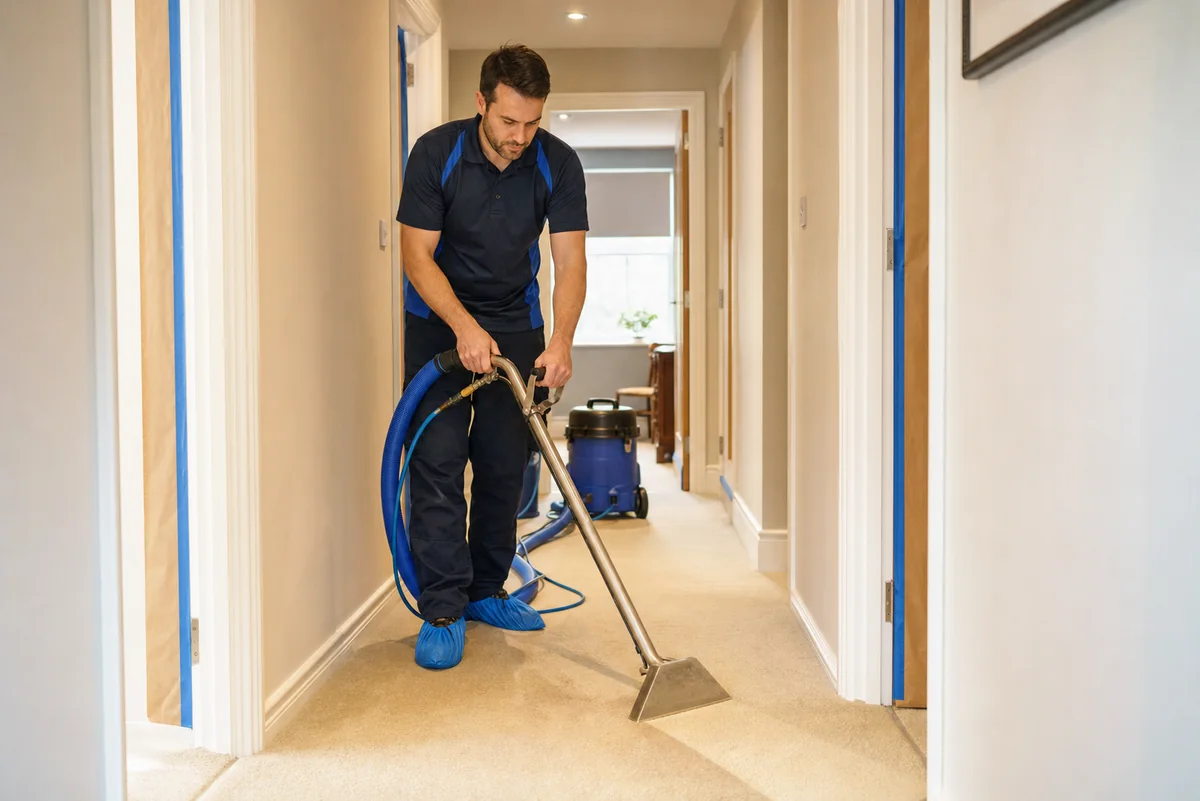
There is no single drying time that applies to every professionally cleaned carpet. A light synthetic pile in a warm, ventilated room may be ready sooner than a dense wool carpet over a moisture-holding underlay in a cool flat. The method and amount of liquid recovered matter too. Ask the technician for guidance based on the actual carpet, then check the slower-drying areas before returning furniture or rugs. “Walkable” may come before “ready for full use”, so plan those stages separately.
What controls the drying rate
Fibre, pile thickness, backing and underlay affect how much moisture a carpet can retain and how easily it releases it. The amount applied during treatment and the effectiveness of extraction also matter. Room temperature, humidity and airflow determine where that moisture can go. A closed, cool room can dry slowly even after careful recovery; a fan or safe ventilation may help in a suitable setting. Direct intense heat on one patch is not a reliable shortcut and can affect fibre or backing while deeper material remains damp.
The location within a room can change the answer. A thick traffic lane, a corner beside a wall and an open patch near a window may feel different at the same time. Stairs and edges may have construction details that trap moisture. A surface can feel dry to a fingertip while the backing or underlay is slower to dry. Do not treat one easy-to-reach spot as proof the whole carpet is ready for a heavy rug or furniture. Follow the technician’s advice on where to check and how much time to allow.
Method labels do not guarantee a timetable
Hot water extraction applies liquid and removes much of it by suction. A suitable low-moisture system may use less water, but it may still have product-specific drying or follow-up vacuuming requirements. The Carpet and Rug Institute’s residential standard recognises hot water extraction as a common professional method and emphasises the full process, including preparation. The operator’s moisture control and recovery are relevant to drying, not simply the machine’s advertised name. Ask what was applied, how it was recovered and what remains to dry.
If a carpet was already wet from a leak or major spill, ordinary post-clean drying advice may not apply. The water source should be fixed and the affected layers assessed. A cleaner cannot make a hidden underlay dry merely by cleaning the face. Persistent odour or dampness beyond the expected range deserves prompt follow-up rather than repeated use of a heater. Our guide to causes of carpet odours helps organise that separate investigation.
Use the room carefully while it dries
Ask whether brief light foot traffic is acceptable and what footwear the technician recommends. Avoid outdoor shoes, repeated walking and moving heavy boxes across damp pile. Keep children and pets out until normal use is safe. A cleaned staircase needs particular care because a damp tread cannot be treated like an open room with another route. Our guide to walking on carpet after cleaning separates a necessary crossing from full everyday use.
Furniture is a separate decision. A metal foot or stained wood can transfer colour to damp carpet; weight can compress pile; a rug can restrict airflow. Ask about protective tabs if the technician offers them, and leave them in place only as advised. Do not cover the floor with plastic for hours to stage a handover. A damp carpet hidden beneath a rug or sheet may dry more slowly and become harder to check. Keep the room arranged so air can move and the slower areas remain visible.
What to check before declaring it dry
Use the cleaner’s guidance, then examine several areas in normal room conditions. Look for visible dampness, unusual coolness that persists, a new odour or a returning mark. A cool feel alone is not a perfect moisture measurement, so consider the whole picture and ask the provider if uncertain. Check near skirting, under an accessible edge and in thicker sections without pulling up fitted carpet or exposing sharp grippers. The carpet should be dry enough for the intended next use, not simply less wet than it was at handover.
Photograph a returning spot or change in colour after drying and note when it appeared. Old residue can move upward as moisture evaporates, while pile grooming can change the way light reflects. Do not pour more water or detergent on the area to “finish” the clean yourself. The cleaner can compare the initial photographs and job record with the dry result and advise whether a limited follow-up is justified. Some colour changes are permanent and should not be chased with repeated wetting.
Plan drying before booking
Tell the company if a new tenant, mover or office staff must use the space at a fixed time. Ask for an on-site window and a separate drying range with the assumptions behind it. Provide room sizes, fibre if known, stairs, ventilation options and any history of leaks or heavy soiling. Our carpet cleaning service can assess a suitable method, and the price guide offers starting costs. A rushed deadline should not force an unsuitable process onto a sensitive carpet.
In a vacant property, assign someone to return and check the room rather than closing it immediately after the technician leaves. In an occupied home, identify a dry route to essential rooms. In an office, agree who removes barriers and returns chairs only after a dry check. Drying is a managed part of the job, not a number to print on an invoice. It is complete when the particular carpet and room conditions allow safe normal use.
For a multi-room appointment, ask the technician to explain which room was finished first and whether it should be checked before the last one. The same house may have a sunny lounge and a north-facing bedroom with little airflow. Do not assume they will reach the same state at the same time. If a dehumidifier is used, place and operate it in line with its instructions and the cleaner’s advice, keeping cables out of wet traffic routes. The equipment can help manage humid air, but it does not prove a backing or underlay is dry. Record the actual condition before the room is closed or occupied again.
If the carpet remains damp unexpectedly, tell the cleaner when and where you noticed it.