
Safe First Steps After a Pet Accident on Fabric
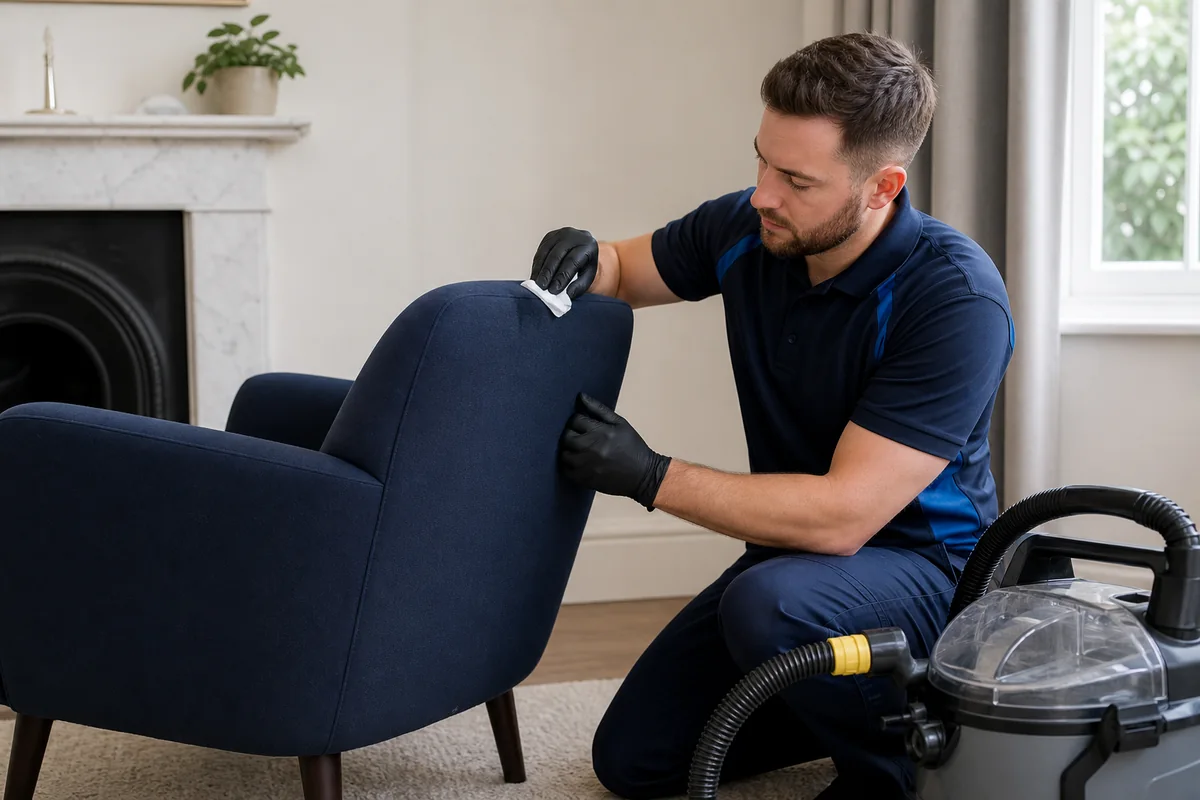
A fresh pet accident on a sofa, chair or other fabric needs a calm first response. Remove what you can without spreading it, then stop before a household product changes the dye or drives moisture into the filling. The right response depends on whether the substance is urine, vomit or faeces and on the fabric’s own care guidance. A small surface mark on a washable removable cover is different from liquid that has entered a fixed cushion or a delicate upholstery fabric.
Protect people and the fabric first
Keep children and animals away from the spot while you work. If the material is solid, lift it carefully with a disposable tool or cloth rather than rubbing it across the upholstery. For liquid, use clean white absorbent cloths and press gently from the outer edge towards the centre. Change the cloth as it becomes wet. Heavy pressure can drive liquid deeper; scrubbing can abrade fibres, blur a stain boundary or spread colour from a patterned fabric. Wear appropriate hand protection for contaminated material and wash your hands afterwards.
Remove nearby loose cushions only if they are designed to come away without forcing a fastening. Check the seat, reverse and frame beneath for wetness. A dry-looking cover does not prove that foam or fibre filling is dry. If the cushion has a removable cover, read the maker’s instructions before unzipping it; a zip does not by itself mean the fabric can be machine washed. Some covers shrink or change colour if laundered separately from the rest of the suite. Keep any care label and product information available for the cleaner.
Decide whether immediate blotting is enough
Blotting is useful for a fresh liquid while it is still accessible. Once the cloth stops picking up moisture, do not keep wetting the surface in pursuit of an invisible source. Pouring water through upholstery can carry contamination into filling and the frame, where drying is difficult to check. A broad spray may create a tide mark across a light fabric. Direct heat from a hairdryer or heater can alter finishes or dry the face while inner material stays wet. Allow safe room airflow and seek advice for a substantial spill rather than trying to force a rapid result.
Check the label for the exact item, but treat it as a starting point rather than permission to improvise. A code or washing instruction for a removable cover may not apply to an inner cushion, fixed arm or decorative trim. Velvet, linen, wool mixes and viscose can respond differently to moisture and rubbing. A cleaner should inspect the face, seams, dyes, padding and any previous treatment before choosing a process. Our upholstery cleaning service can assess suitable options for the actual piece.
Why common home remedies can complicate the job
Household detergent may leave residue that attracts soil; bleach and strong stain removers can alter dye and damage fibres. Vinegar, bicarbonate and perfumed sprays are not universal solutions for pet accidents. Combining products creates an unknown mixture and may conceal the history a technician needs. If a product has already been applied, stop and record its name, amount, timing and where it touched the fabric. Do not claim the item has had “nothing on it” because the first attempt seemed harmless. That detail may explain a later pale patch or persistent ring.
The accident may include both visible colour and odour. Removing the visible mark does not show that inner filling is free of contamination. Conversely, a faint old colour change may remain after a source has been treated. The Carpet and Rug Institute’s guidance on pet urine in carpet describes how an accident can reach deeper layers and resist complete removal; upholstery has different construction, but the general warning against judging only the surface is relevant. Do not transfer carpet cleaning instructions to a sofa as if they were the same material.
Give a cleaner the right information
Take photographs of the full item and close views of the affected seat, arm or back. Note the time of the accident and whether it was a single event or repeated use of the same place. Say whether liquid reached a cushion underside, seam or wooden frame. Mention any odour present before the new accident and any previous cleaning. If there is a known fabric brand or care label, photograph it. These details help a cleaner decide whether a controlled surface treatment is plausible or whether an insert or other component needs separate assessment.
Ask what the treatment includes. Does it address only the cover, or can the filling be inspected? How will moisture be removed, and where should cushions stand while drying? A claim that a whole cushion has been sanitised needs evidence that the inner parts were treated and dried, not merely that the outer fabric looks clean. Our guide to sofa drying after cleaning explains why foam, fibre and feather change the decision. If the contamination is large or the insert cannot be dried safely, replacement may be a better answer than a cosmetic surface clean.
Aftercare is part of the first response
Keep the item out of ordinary use until the affected materials are dry according to the technician’s guidance. Do not put a damp cushion back against the sofa frame or stack wet covers together. Check seams and the underside as well as the visible face. A persistent cool feeling, returning odour, new tide mark or colour transfer is reason to stop and ask for reassessment. Add no further household product while the cause is uncertain. If the pet is likely to return to the spot, protect the item after it is fully dry using a covering compatible with the fabric and the maker’s advice.
The safest early action is modest: contain the fresh accident, blot gently, preserve the care information and arrange an assessment when the spill may have reached hidden material. There is no need to make the upholstery look perfect before a cleaner sees it. A clear history, an undisturbed stain boundary and photographs of the original condition give the next treatment a better chance of being both effective and safe.
If an accident occurred on a dining chair or fabric headboard rather than a sofa, the same principle applies but the construction may be less accessible. A fixed upholstered panel cannot simply be taken outdoors to dry, and moisture may run into timber or a wall. Tell the cleaner about that setting before booking so the method, protective measures and drying arrangement are matched to the whole item, not just its visible fabric.