
What to Tell a Cleaner About a Pet Accident
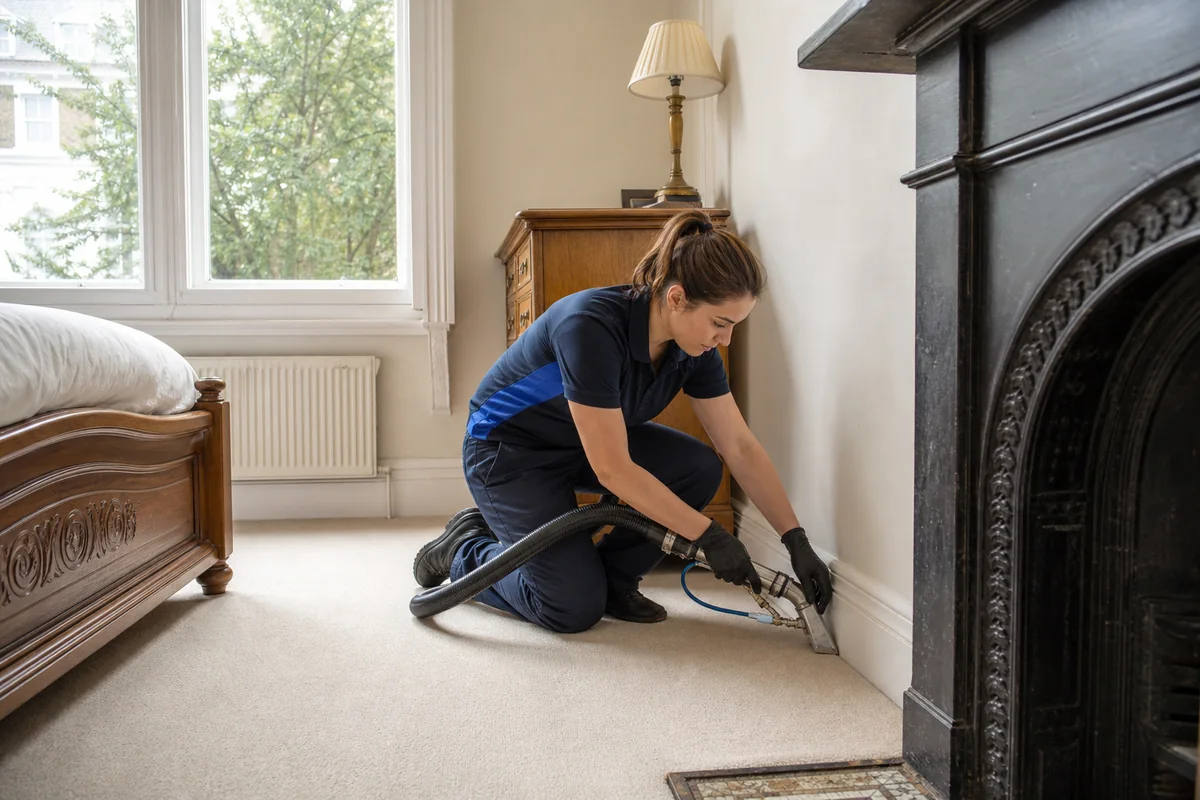
The most useful thing you can give a cleaner after a pet accident is a clear account of what happened. A photograph shows the visible mark, but it cannot reveal whether the liquid reached a seam, underlay or sofa filling. The age of the accident, the material involved and every product already applied determine how the cleaner should inspect and test the area. A brief factual history is more valuable than asking for a particular machine or promising that the mark is “only on the surface”.
Describe the event, not just the stain
Say whether it was urine, faeces, vomit or something uncertain. Mention whether the animal was unwell, because the nature and amount of the spill may differ from an ordinary small accident. Record roughly when it happened and whether it was a single event or repeated use of one corner. If the pet marked several places, draw a simple room plan rather than relying on memory during the visit. A cleaner can then inspect all relevant areas, including ones that are no longer visibly stained. If there is a major contaminated spill, ask promptly whether the job falls within ordinary cleaning or requires a different specialist response.
The amount of liquid matters, even if it is only an estimate. A few drops on a tightly woven chair seat and a puddle that remained beneath a rug overnight call for different questions. Tell the cleaner whether liquid reached the reverse of the fabric, a cushion insert, carpet underlay, skirting board or wood floor. Do not lift a fitted carpet or take apart upholstered furniture unless the maker’s instructions and your skills allow it. Instead, describe what you can see or smell and flag the uncertainty. The aim is to prevent a superficial quote from overlooking a hidden layer.
Make a complete list of previous treatments
Write down what you used, how much, where and when. Include water, detergent, stain remover, deodoriser, enzyme product, vinegar, bicarbonate, steam appliance or any product applied by another cleaner. If you still have the bottle, provide its name or a photo of the label. You do not need to defend an earlier attempt; the cleaner needs the information because residues can affect colour testing, drying and later products. Saying “nothing was used” when the area was heavily rinsed can lead to a poor diagnosis of a returning mark.
Avoid adding a final strong product immediately before the appointment. A fragrance may mask the smell at inspection without removing the source. More liquid can enlarge the affected area or reach a backing that was previously dry. Mixing chemicals is particularly unwise. The Carpet and Rug Institute’s pet urine bulletin explains that urine can damage carpet backing and that old stains may not be fully removable. That is a reason to disclose the full treatment history, not a reason to assume every accident has caused irreparable harm.
Photographs and observations that help
Take one photograph of the whole room or item, then closer views of each mark. Include a doorway, leg or other fixed reference so the cleaner can locate the spot on arrival. Photograph a carpet seam, rug reverse or removable cushion underside if it is safely accessible. Natural or consistent light is preferable; a flash can erase subtle colour differences. Write down odour patterns separately from what the camera shows. Does the smell appear when the room is warm, after rain, near floor level or only when the fabric is pressed?
Note changes over time. A pale ring that appeared as the surface dried, a patch that resoiled quickly or a smell that returned after a previous clean is useful evidence. Do not repeatedly wet the material to demonstrate the problem. If the pet keeps returning to the same area, tell the cleaner; repeated accidents increase the chance that deeper layers are involved. Our guide to carpet odour causes can also help distinguish an accident from dampness or another source.
Ask what the proposed work will actually reach
A quote should identify the material, the affected locations, the intended process and important exclusions. For fitted carpet, ask whether the proposal covers the face fibres only or includes assessment of underlay and floor. For upholstery, ask whether the removable cover, filling or fixed frame can be inspected. On a rug, ask whether treatment is in place or requires specialist workshop handling. These are not interchangeable surfaces. The cleaner should decide method and testing after seeing the actual item, and explain if colour instability, weak backing or slow drying limits what can be attempted.
Our carpet cleaning and upholstery cleaning pages describe the routine services. A pet accident may need a separate assessment and quote, particularly where contamination has entered padding. Do not interpret a routine cleaning price as a guaranteed odour-removal package. Ask the cleaner how they will judge the result once dry, when the area can be used again and what information to send if the smell returns. Keep the written scope so a later conversation starts from the treatment actually performed.
After the visit
Follow the drying instructions for the specific item. A carpet face can feel dry while underlay remains damp; a sofa cover can dry before its filling. Keep pets and people away from treated areas until the cleaner advises normal use. Assess colour in similar light to the original photographs. If a smell remains or reappears, note the conditions and contact the provider with the accident history and cleaning date before applying something new. An old colour change and a continuing odour are separate outcomes, so report them separately.
A careful cleaner may say that one treatment has a limited chance of success or that an underlay, cushion insert or floor needs separate work. That is useful information, not a failure to offer a confident answer. Your part is to provide the whole history and avoid changing the evidence between quotation and inspection. The clearer the starting record, the easier it is to choose a proportionate treatment and judge the result fairly.
If the property belongs to a landlord or another family member, agree who can approve extra work before the appointment. The technician may discover that the visible patch is much smaller than the affected backing, or that lifting and replacing a component needs a different trade. Having the decision maker available avoids an improvised treatment chosen only because access is limited. Record any revised scope and cost before it begins, and retain the condition photographs with the invoice for future reference.