
Sofa Cleaning for Homes with Pets
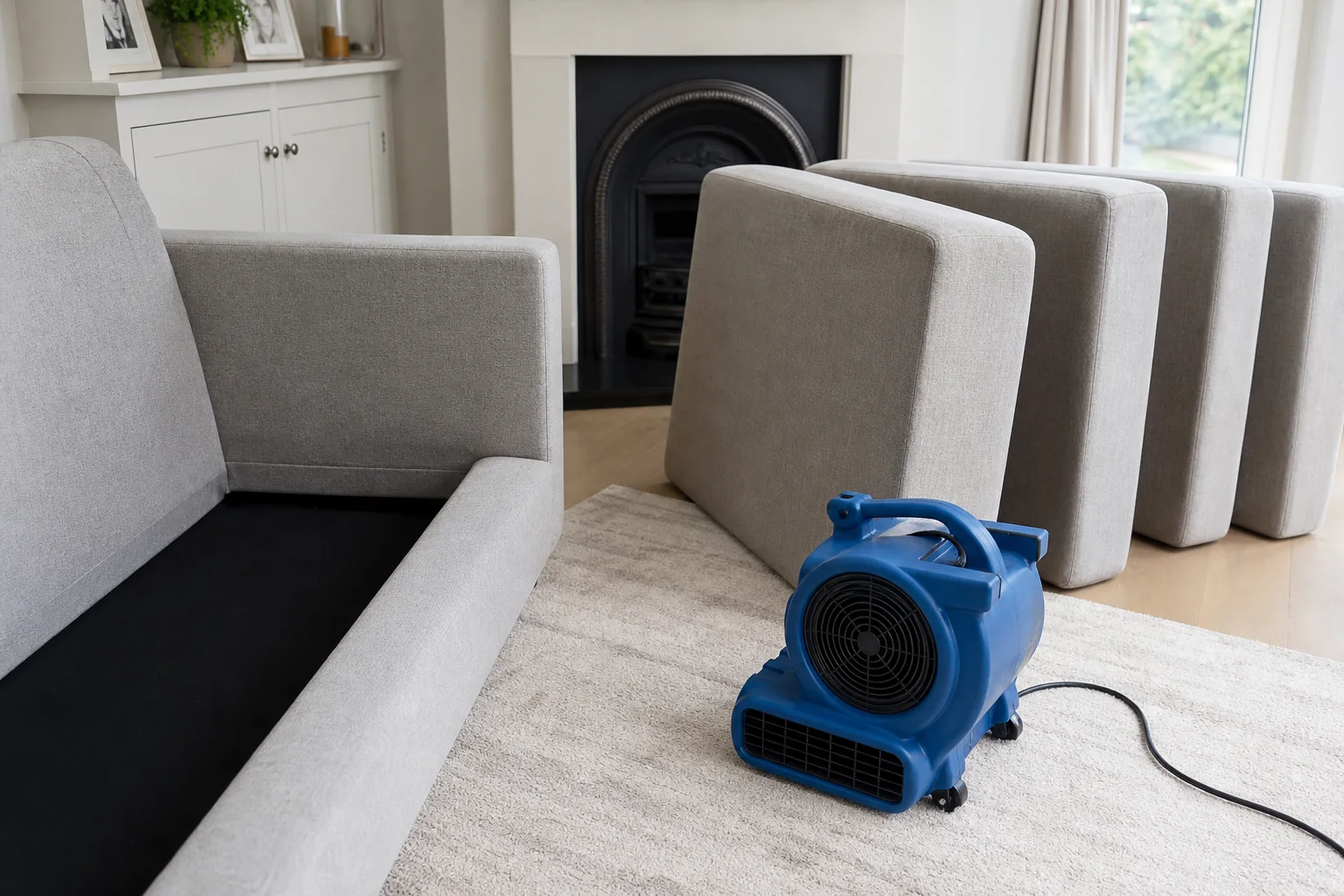
A sofa shared with pets can collect loose hair, outdoor dust, body oils and the occasional accident. Those problems need different responses. Suitable vacuuming can remove hair and grit, a paw mark may be treatable at the surface, and liquid that reaches a cushion core may need a wider assessment. Professional cleaning can improve suitable soil, but it cannot repair claw snags, restore worn pile or guarantee that a deep cushion is free from an old spill. The fabric and construction determine what is safe.
Begin with the sofa maker's care instructions and note any separate rules for removable covers. A zipped cushion is not necessarily washable. A throw or washable pet blanket can help reduce contact soil if it is laundered by its own label and removed before it traps moisture against the sofa. Avoid using a heavy waterproof cover over a damp seat.
Hair and everyday soil
Use a suitable upholstery attachment to remove loose hair and dry grit, following the fabric maker's guidance. A stiff brush or aggressive sticky tool can pull loops or disturb a velvet pile. Check creases, piping and under loose cushions where hair collects. Cleaning a pet bed or throw at the same time prevents loose material returning immediately to the sofa.
Look at the favourite resting place in daylight. A dark patch may combine soil with flattened or abraded fabric. Cleaning can release suitable soil but cannot rebuild worn yarn. The guide to upholstery cleaning risks and limits explains why vulnerable fabric should be identified before treatment.
Muddy paws and small spills
Lift loose dry material carefully. For ordinary mud, letting it dry before gentle dry removal can avoid spreading fine particles. For a fresh liquid spill, blot with clean white absorbent cloths rather than rubbing the mark across a larger panel. Do not add bleach, strong fragrance or an untested enzyme product simply because the accident involved a pet. The cover dye, finish and filling may react differently from the carpet for which a product was marketed.
Photograph the mark when dry, record what happened and list earlier products. A small spot clean may leave a pale island against a generally soiled seat. A professional can discuss treating the panel more evenly if the fabric tolerates it, but should not promise that a permanent colour change will disappear.
When an accident reaches the cushion
A liquid accident can pass through a cover into foam, loose fibre, feather or a timber frame. A clean-looking top does not prove the inner material is dry. An odour that returns after surface treatment may come from below, from a pet blanket or from the surrounding room. The guide to How Long Does a Sofa Take to Dry After Cleaning? explains why the filling changes both treatment and drying.
Tell the cleaner the approximate amount of liquid, whether it was repeated and where the cushion was positioned. If a large contaminated spill entered a removable core, replacement of that part may be more practical than repeated wetting. A routine upholstery service should not claim to sanitise an inaccessible filling without evidence.
Protect fabric from claws and friction
Pet claws can catch loose loops, piping or weak seams. Trimming a snag without knowing the weave can make it worse. A pet may repeatedly jump onto one arm or sleep against one back cushion, creating an uneven contact pattern. Cleaning may remove oil and dust while a flattened pile or worn corner remains. A suitable washable throw can spread contact, but it should not be fixed in a way that traps dampness or creates a hazard.
Point out frayed edges and previous repairs before a professional visit. The technician may need to reduce agitation or avoid a damaged area. The upholstery cleaning service should match its method to the actual fabric, trims and condition rather than apply one process to every pet household.
Plan the visit around animals and drying
Keep pets securely away from equipment, open doors and treated upholstery. Explain in advance if a pet is anxious or may escape. Make space around the sofa without moving heavy furniture alone. Ask which cushion faces, arms and backs are included and how any odour source will be assessed. A scented finish is not the same as removing a deep source.
After cleaning, keep animals and people off the sofa until the technician says it is ready. Position loose cushions for airflow as advised. Do not put pet bedding or a waterproof throw back onto damp fabric. Drying depends on the method, fibre, filling and room humidity. If a smell or ring returns, note when it appeared and whether the cushion still felt damp.
Choose maintenance that suits the whole sofa
Regular gentle hair removal, clean pet blankets and prompt response to accidents can reduce the need for heavy intervention. Review the arms, favourite seat and seams periodically. If the fabric has changed texture, seek realistic advice on wear rather than another stain treatment. For a quote, send the care label, whole-sofa photographs and accident history through the contact page. The price guide gives starting prices; a deep cushion problem may require a different decision from ordinary surface cleaning.
A sofa with one favourite cushion
If a pet always sleeps on one cushion, compare that cover with the unused reverse side only if the maker allows turning it. The occupied face may hold oils and hair while its pile is compressed. A cleaner may improve the soil yet leave the texture difference. If a wet accident reached the filling, cleaning only the visible face may not address the source. Ask whether the cushion core can be inspected or replaced, and whether a matching cover would still fit afterwards.
Keep pet products separate from upholstery products
A spray sold for animal accidents may be intended for washable hard surfaces or colour-stable carpet, not a particular sofa fabric. Check both labels before use. A strong scent can mask a deeper issue, and repeated spraying can produce a ring or leave sticky residue. For a fresh accident, blot gently and share the product history with the cleaner. Prevention through a suitable washable throw is often easier than repeatedly wetting a delicate cover.
For a sofa with removable cushions, note which face the pet normally uses and keep the cushions in the same order after cleaning if the maker recommends it. A colour difference can arise because one cushion has had more sunlight and contact, not because cleaning was uneven. If the pet has scratched a seam, ask about repair before cleaning stresses it further. A professional may be able to treat surrounding soil cautiously, but cannot reconnect torn fabric through cleaning. These details help set a fair outcome: a cleaner-looking sofa that still shows normal wear from repeated use.