
How Professionals Clean Upholstered Dining Chairs
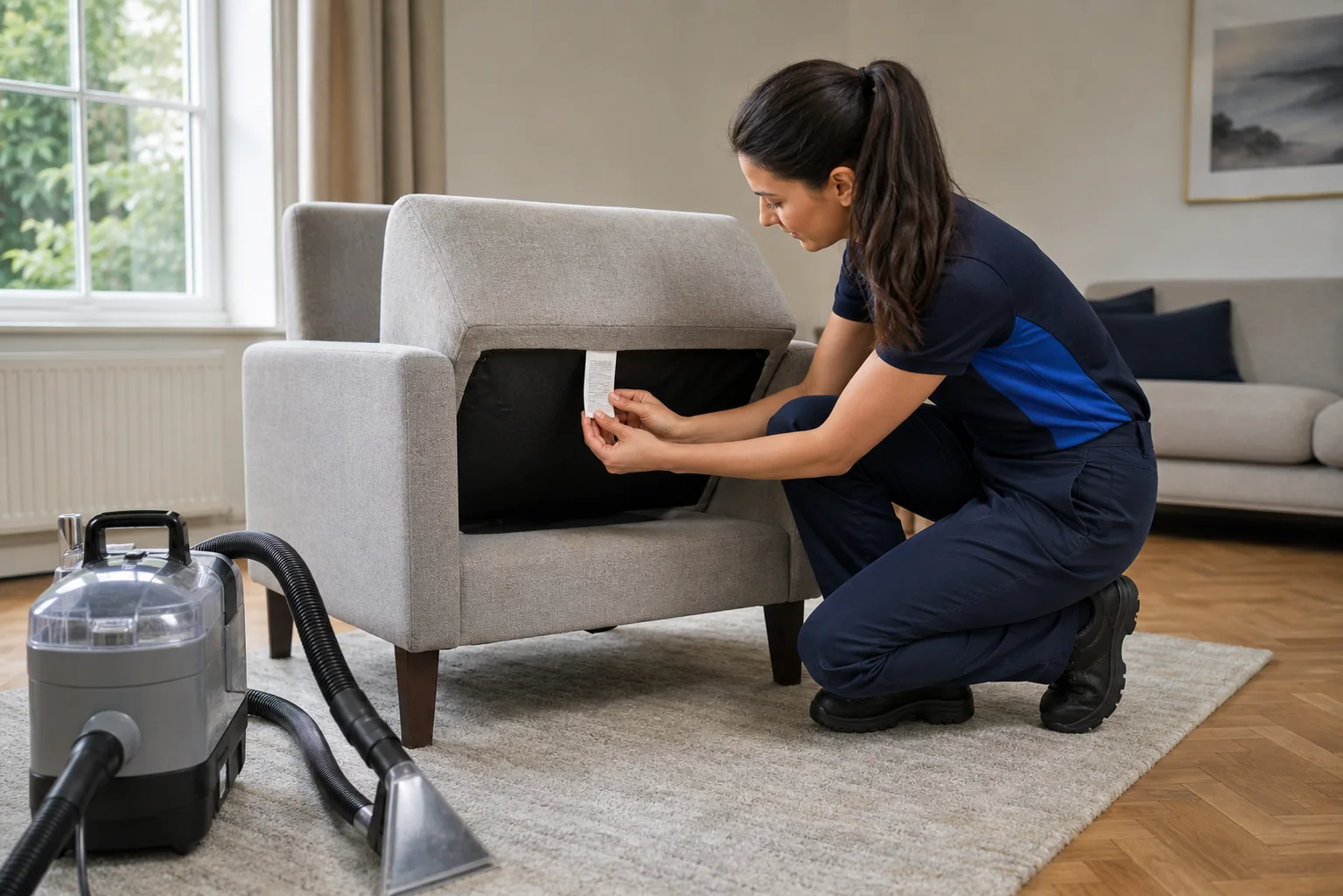
An upholstered dining chair is used differently from a living-room sofa. Food falls onto the seat, hands grip the backrest, and a chair is regularly moved across the floor. The visible stain may be small while grease has spread through the cover or into thin padding. Professional cleaning should account for the fabric, the seat board, staples and wooden or metal frame, as well as the mark. Treating six matching chairs as identical without inspecting their individual condition can miss a spill or a loose seat on one of them.
Before booking, count the chairs, photograph the whole set and point out which seats have distinct marks. Tell the cleaner what spilled and whether any seat was cleaned at home. A dried patch of tomato sauce, a sugary drink and accumulated body oil can need different treatment. If you do not know the source, describe when you first noticed it rather than guessing from its colour.
Begin with the chair's construction
Some dining seats are upholstered over a removable board; others have fixed upholstery running into the chair frame. The fabric may be woven, velvet, faux leather or a blend. Decorative piping, buttons and exposed timber introduce more materials. A cleaner should check the maker's guidance, assess visible seams and test colour where appropriate before applying moisture to a whole seat.
A thinly padded seat may put a timber board or adhesive close to the surface. Too much liquid can reach it quickly and later leave a brown line or distortion. A pale cover may show such movement more clearly than a patterned one. A loose board or broken frame should be repaired as a separate issue; cleaning is not a substitute for structural work.
Remove dry material before wet treatment
Crumbs and loose grit can be lifted gently from the seat and creases using a suitable vacuum attachment or careful dry method. Grinding them into the weave with a wet cloth makes the job harder. The technician can then inspect whether a mark is mainly an attached residue, a grease shadow, dye transfer from clothing or permanent wear. A fabric that looks darker only from one direction may have a pile effect rather than a removable stain.
The guide to What Is Pre-Treatment in Upholstery Cleaning? explains why oils may remain after visible crumbs have gone. If a chair has a matching bench, mention it separately; its long fixed cushion may dry differently from a small removable seat.
Treat the mark and the surrounding panel
After testing, a professional may use a targeted pre-treatment for the likely soil, then a cleaning method that manages moisture and recovery. A small dark patch on an otherwise soiled seat can become a light island if cleaned in isolation. Treating the seat panel more evenly may be sensible when the fabric tolerates it. The cleaner should not promise to remove colour loss, abrasion or a stain that has permanently changed the fibre.
Contrast piping and seams need careful attention. They can hold crumbs and product, while their dyes may respond differently from the main seat. The upholstery cleaning service can assess how a whole set should be handled; the right approach may differ across chairs if one has weak seams or previous chemical damage.
Protect the frame and floor
Dining chairs often have exposed wood, paint, metal fixings or felt pads on the legs. Tell the cleaner about valuable timber finishes and any loose parts. Product drips or a damp cloth left against the frame can affect it. Chairs should be positioned so that the cleaned seats can dry without resting against a wall or another chair. Floor protection may be needed if chair legs or padding are damp.
Do not stack or tuck chairs tightly under the table while the upholstery is wet. Air needs to reach each seat. Ask the technician when the chairs can be used again; a dry-looking top does not always mean the thin padding and seams are dry. Drying depends on room ventilation, fabric and method, not a universal number of hours.
What to do with a fresh spill
Lift loose food gently and blot liquid with clean white absorbent cloths. Do not scrape hard against the weave or scrub a ring with washing-up liquid. Some food marks contain both oil and pigment, and repeated wetting can enlarge the boundary. If a large drink spilled through the seat, point out the underside and the board to the cleaner. A surface clean may not address liquid held beneath the cover.
Photograph the spill after the area dries and keep a note of earlier products. If a retailer supplied care instructions, follow them. A removable seat pad should only be laundered if its own maker permits it; the outer fabric, backing and padding may have different needs.
Judge the whole set after drying
Compare the chairs in similar daylight once they are fully dry. Chairs used at the head of the table may have different wear from those used occasionally, even after all removable soil is gone. If a mark returns, note which chair, when and whether there is an odour or damp feel. Avoid treating it again before the source is assessed.
For a quote, send chair count, seat dimensions, fabric labels and photographs through the contact page. The price guide provides starting prices. Agree whether backs, arms and removable pads are included so the work matches the furniture you expect to use at the next meal.
Six chairs may need different priorities
At a dining table, the two chairs used daily may have oily contact soil, one guest chair may hold a recent wine spill, and the remaining three may need only loose crumb removal. A cleaner can assess the set together while tailoring treatment to each seat. Agree whether matching appearance is the goal and whether backs are included. A strongly faded seat may remain lighter than its neighbours even when all six are clean. Numbering chairs in photographs helps identify which mark belongs to which chair after they are moved for drying.
Dining chairs can also be stored close together, which changes drying. Space them so cleaned seats and backs do not touch, and protect a timber floor from damp feet or drips. If children will use the table that evening, arrange another place to sit rather than shortening the drying period by guesswork. A chair with a loose removable pad needs its own care instructions; laundering the pad against its label can change its fit even if the fixed chairs are sound. Record which chair received which treatment so a recurring mark can be discussed accurately later.