
Can Professional Cleaning Damage Upholstery?
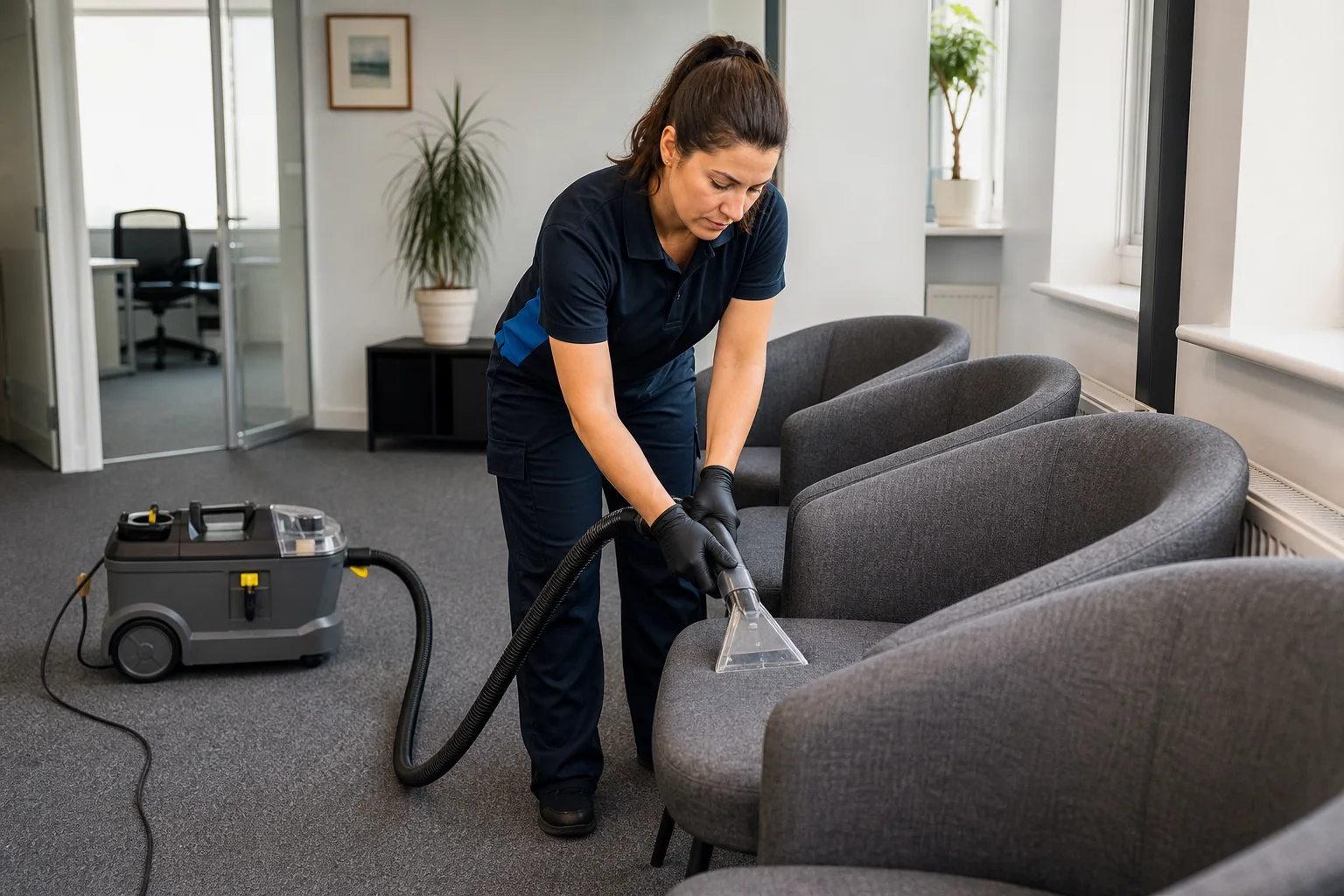
Professional cleaning can damage upholstery if the method does not suit the material or if existing weaknesses are ignored. Colour can move, a cover can distort, a pile can change texture, and excess moisture can reach filling or framing. These outcomes are not inevitable: inspection, testing, controlled application and honest limits reduce the risk. They do not turn every old or delicate sofa into a risk-free cleaning project. The decision begins with the actual piece, its history and the manufacturer's instructions.
Before work, photograph the sofa in daylight, including worn arms, loose seams, faded areas and earlier stains. If you used a household stain remover, say which one and where. A new-looking pale patch may already be dye loss rather than dirt. Recording the starting condition helps both customer and cleaner distinguish an existing defect from a change after treatment.
Colour and finish are separate concerns
Some dyes may transfer or bleed when exposed to moisture or a chosen product. A contrast piping detail can mark a paler seat. Printed fabric or velvet may change appearance when a surface finish is disturbed. Colour-fastness testing in suitable areas gives useful evidence, but a hidden spot may have had less sunlight and wear than the seat face. The colour-fastness guide explains what testing can and cannot establish.
Cleaning cannot restore colour that was lost to bleach, sunlight or abrasion before the appointment. A cleaner may remove surrounding soil and make the remaining pale difference more visible. That can look like a new problem unless it was identified and discussed beforehand. A realistic quote should distinguish removable material from a changed textile.
Moisture can affect more than the surface
An absorbent cover may pass liquid into foam, loose fibre or a timber frame. Too much moisture can prolong drying, move soil to a new boundary or create a returning mark. Some adhesives or backing materials can also be sensitive. A sofa that feels dry on top may still contain damp inner layers. This is why “steam cleaning” is too vague to judge safety: ask about actual moisture application, recovery and drying support.
The risk differs with construction. A loose cushion can sometimes be positioned for airflow, while a fixed seat may be harder to dry internally. A delicate trim can stay damp after the broad panel is dry. The guide to How Long Does a Sofa Take to Dry After Cleaning? describes why an apparently dry cover does not settle the question for every cushion.
Mechanical stress can reveal weakness
Brushing, extraction tools and even careful handling place some force on upholstery. A worn arm, fraying seam or brittle decorative thread may deteriorate under a method that would be safe on sound fabric. Buttons, tassels and skirt panels can catch on equipment. A responsible technician should inspect and protect vulnerable details, alter the method or decline work where damage is likely.
Shrinkage or distortion is another possible issue, particularly where covers are removed and laundered against the manufacturer's directions. A zip does not mean machine washing is permitted. Covers may shrink enough to be difficult to refit, or a panel may dry unevenly and pull against seams. Do not remove or wash a cover based solely on its fibre label.
What a careful assessment looks like
The cleaner should ask about the material, previous products and desired result; examine labels, backing where accessible, seams, trims and colour; and test before treating broad areas. They should explain which panels are included, why a method fits the piece and what visible change may remain. A test is not a guarantee, but it is a way to avoid a blind choice. If an item is valuable, antique or unusually fragile, specialist advice may be appropriate.
Ask for clarity rather than a sweeping promise. “We will use a controlled method and test the dye” is more useful when paired with specifics about the fabric than “our machine is safe for all sofas”. The upholstery cleaning service can discuss the particular item; photographs through the contact page are a starting point, not a replacement for inspection.
Aftercare also affects the outcome
Allow enough time for drying, follow the technician's ventilation guidance and keep people and pets off treated areas until safe to use. Do not place a strong heater against the fabric or replace a waterproof throw over a damp cushion. Check the sofa once dry in similar lighting to the original photographs. A freshly groomed pile can appear different while damp and settle later.
If you notice a new ring, colour transfer, persistent dampness or texture change, contact the cleaner promptly with photographs and the timeline. Avoid adding a new household product while the cause is being assessed. A prompt conversation gives a better chance of understanding whether there is removable residue, a drying issue or a permanent change.
When declining work is the right outcome
A professional may recommend no wet treatment, a specialist method or replacing a damaged cushion. That can be frustrating when the mark is visible, but it is preferable to making an unstable textile worse. Cleaning is a considered attempt to remove suitable soil while preserving the item. It should not be sold as a way to reverse every form of wear or previous chemical damage.
Distinguish cause from timing
A mark noticed after cleaning was not necessarily created by it, but the timing deserves investigation. Compare pre-clean photographs, the technician's notes and the fully dry result. A stain hidden by general soil may become visible when the surrounding panel brightens; a colour bleed at a seam may be a new reaction; a brown edge that appears later may indicate material migrating as moisture dries. These require different responses. Avoid applying a fresh retail product while the cause is being assessed. A careful record makes a fair conversation possible without assuming either that all change is damage or that every complaint is pre-existing wear.
If a piece is especially valuable or sentimental, ask the cleaner to document its weak areas and the agreed limits in writing. An old chair with a split seam may still benefit from gentle dry soil removal even when broad wet cleaning is ruled out. A damaged cushion cover may need a furniture repair specialist before any further cleaning. The choice need not be between a full machine clean and doing nothing; a narrower or staged approach may protect more of the item. Make sure the person who will carry out the work has seen the same condition that was described during the quote.