
How Often Should a Sofa Be Professionally Cleaned?
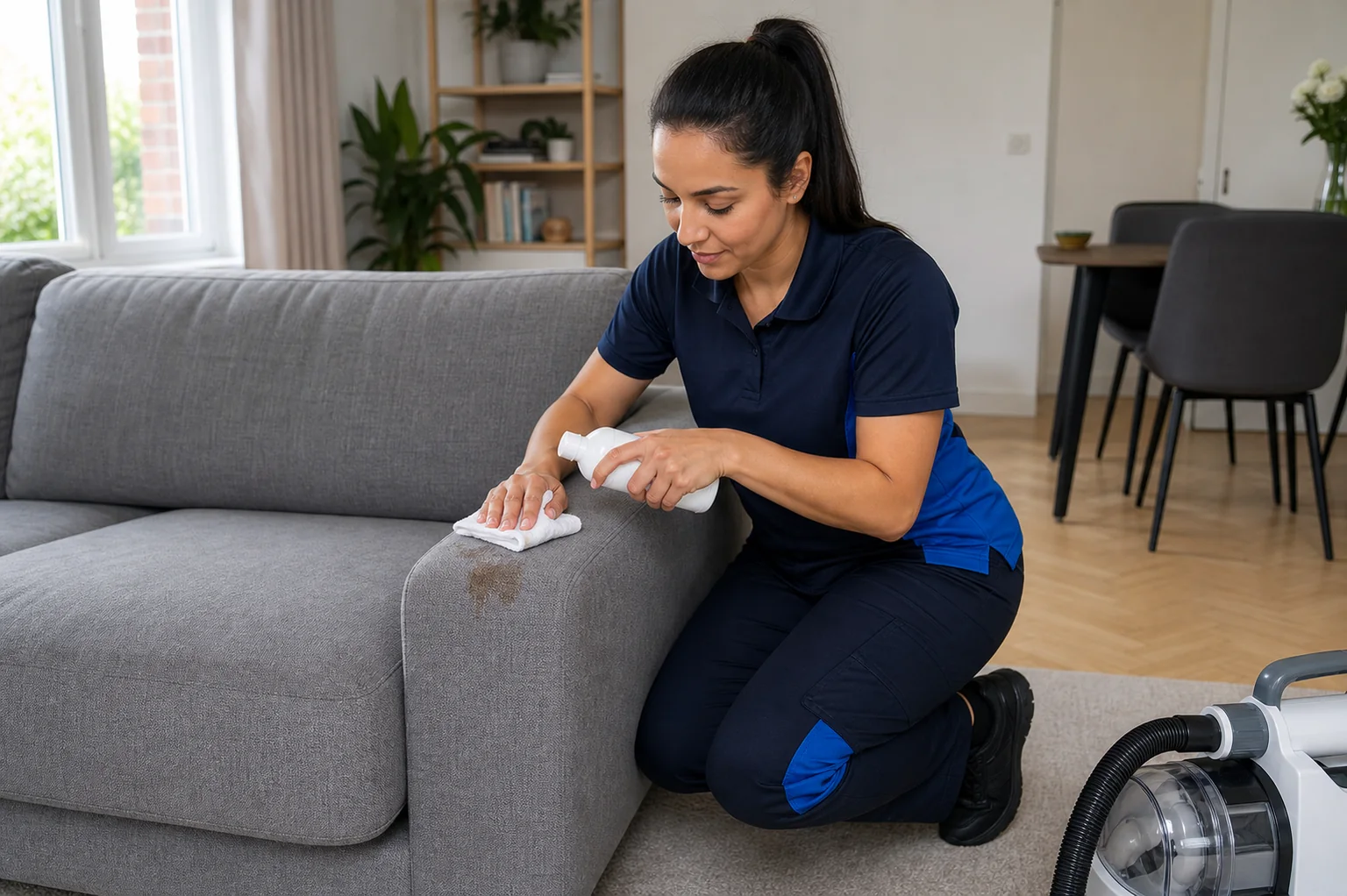
There is no useful calendar rule that fits every sofa. A lightly used guest-room settee can stay presentable far longer than the family sofa where people eat, pets sleep and children play. The sensible interval depends on the cover's care instructions, how much loose dust and body oil it collects, and whether its appearance or feel has changed. A professional clean is one part of maintenance; regular gentle vacuuming and prompt, careful response to spills often matter more than booking at an arbitrary date.
Begin with the maker's instructions for the exact model. They may specify professional care, a permitted method, or restrictions for covers, trims and cushion fillings. A label that lists the face fibre alone does not describe every material inside the sofa. If the instructions are missing, ask the manufacturer before applying a method seen on another piece of furniture.
Look at how the sofa is used
Consider who sits where and what reaches the fabric. The centre seat of a family sofa may receive daily clothing friction and food crumbs. An arm used to support hands or heads can collect skin oils and hair products. A sofa beside an entrance may pick up outdoor dust, while a formal room seat may see little contact. Those different patterns explain why one area looks tired before another. They also help a cleaner decide whether a local assessment or a wider clean is appropriate.
Pets add hair, dander, tracked-in soil and sometimes odour, but the presence of a pet does not automatically dictate a fixed professional cleaning schedule. A washable throw, suitable vacuum tool and prompt attention to accidents may reduce the soil reaching the upholstery. If an accident has soaked through to the cushion, the issue is not simply when the next routine clean is due; the inner material may need its own assessment.
Signs that routine care is no longer enough
Compare the busy seat and arm with a sheltered part of the same sofa in consistent daylight. General greying, a sticky feel, an odour that returns quickly, and a visible band of contact soil may justify asking for an assessment. A single stain may be a different problem: it may need targeted treatment even if the rest of the sofa is clean. Conversely, a pale patch caused by sun fading or a flattened pile may not improve with cleaning at all.
Vacuuming can remove loose particles from a suitable upholstery fabric, especially around seams and under loose cushions, but it cannot necessarily lift oils attached to fibres. Follow the maker's guidance and use an appropriate attachment without snagging delicate threads. Do not use a stiff brush to force an apparent improvement. If a fabric pills, loses dye or shows weak seams, mention those conditions before booking; they affect the safe cleaning method.
A practical review rather than a fixed rule
Check the sofa every few months while doing ordinary household maintenance. Look at the seating areas, arms, back, piping and accessible underside. Note when an odour or mark first appeared. The aim is to spot a change early, not to create a burdensome inspection regime. A brief photograph in similar light can show gradual soiling better than memory does.
If the sofa still looks and feels clean, maintain it according to the maker's instructions. If contact soil has built up or a previous spot treatment left a ring, ask a professional to assess the fabric and realistic benefit. Households with heavy daily use may need that conversation sooner than those with occasional use. A cleaner should explain why a proposed interval fits your sofa instead of treating an annual booking as a universal requirement.
Cleaning frequency and fabric life
Leaving abrasive grit and oily soil in a busy cover can make maintenance harder, but excessive or unsuitable cleaning can also stress the material. The balance depends on the weave, pile, dyes, backing and finishing treatments. Velvet, linen blends and tightly woven synthetics are not interchangeable. Some marks become more noticeable when one small part is cleaned against a soiled panel; a planned whole-panel approach may be more even when the fabric permits it.
The Professional Cleaning for Fabric Armchairs explains a common pattern of uneven use. It can help you distinguish a routine soil issue from surface wear. The sofa cleaning service can assess the actual piece, including labels, filling and colour stability, before recommending a method or frequency.
Plan the clean around the household
Choose a day when the sofa can remain unused until the cleaned areas are dry. Drying varies with the fabric, filling, method and room conditions; a fixed promise made before inspection can be misleading. Make space for the cleaner to reach all agreed areas, remove loose possessions, and tell them about fragile legs, existing tears, previous products and spills. Ask whether all cushions, backs and arms are included in the quote.
Afterwards, follow the technician's guidance on ventilation and when cushions can be returned or sat on. Once dry, record any permanent marks or wear that remain. Then continue the ordinary care that suits the fabric. A good cleaning interval is the one supported by the sofa's condition and use, not the shortest interval a company can sell.
For a quote, the price guide sets out starting points, while the contact page lets you share the sofa size, fabric label and photographs. Include the number of seats and whether the cushions are loose or fixed. That information makes the scope clearer and helps avoid confusing a maintenance clean with a deep spill problem.
Two common timing questions
Should a new sofa be professionally cleaned straight away?
Usually the first step is to follow the maker's maintenance instructions. A new sofa without soil or a spill does not need cleaning simply because it is new. Keep the care information for later.
Does a recurring smell mean it is time for a routine clean?
It calls for finding the source first. An odour in a cushion core, underneath a sofa or from another room may not be solved by cleaning the visible cover. Explain where and when you notice it.
A useful way to keep track
Note the date of a clean and any permanent wear or stain that remained after drying. At the next check, compare the same areas in similar daylight. This separates new soil from a longstanding texture change and helps you judge whether another service would add value. A cleaner can then recommend an interval based on observed change rather than on a date alone.