
Can Sofa Cleaning Improve Food and Drink Marks?
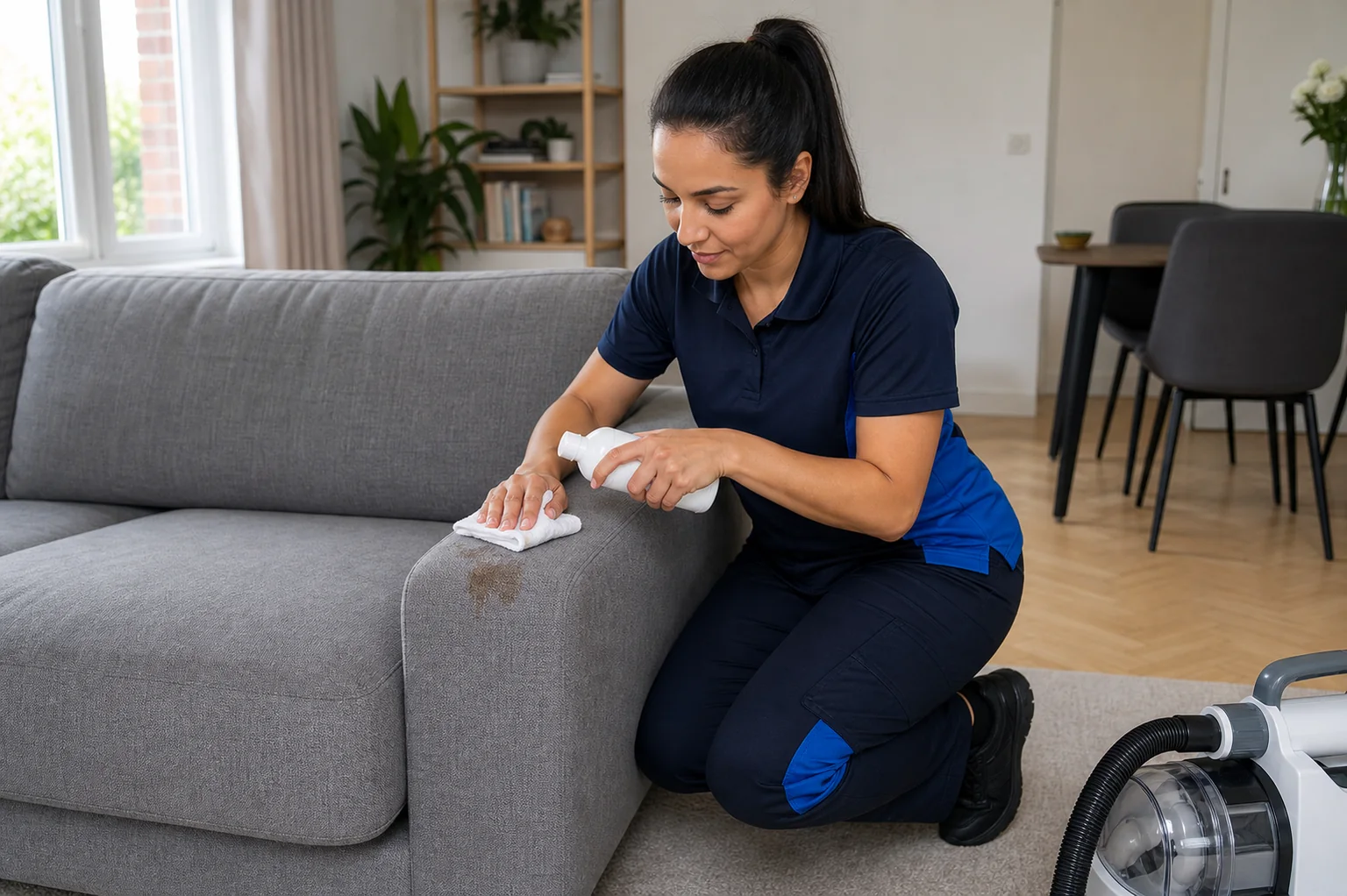
A food or drink mark on a sofa is not one kind of stain. A dropped biscuit may leave removable crumbs and fat; tea may leave tannin; red wine can leave a strong colour; milk can reach the cushion filling and develop an odour. Professional cleaning may improve any of these, but the outcome depends on what reached the fibres, how long it has been there and what happened to the upholstery afterwards. A mark that has changed the dye or finish can remain even after the foreign material is removed.
The first useful decision is whether the spill is still wet. If it is, lift loose food without grinding it into the fabric and blot liquid with plain white absorbent cloths. Press and lift rather than rubbing. If the spill was large enough to reach the filling, tell the cleaner; a clean-looking cover does not prove that its interior is dry. If the mark has already dried, take a photograph and leave it alone until you have checked the sofa maker's instructions.
Identify the spill before choosing a method
Describe the actual food or drink as precisely as you can. Coffee with milk and sugar is different from black coffee; a tomato sauce mark can contain both pigment and oil; a fizzy drink may leave a sticky residue after the colour fades. If you do not know what was spilled, say so. The colour of a dried patch is a poor substitute for that history because several substances can produce a similar brown ring.
Note whether water or a retail stain remover has already been used. A home treatment may have diluted the original stain, moved it to an outer edge or introduced a residue of its own. Some products can affect upholstery dyes and protective finishes. Keep the product container or a photograph of its label for the technician. Repeating the same treatment because the fabric looks lighter while damp can enlarge a ring that becomes visible again only after drying.
The upholstery matters as much as the spill
Two sofas exposed to the same cup of tea may need different care. A tightly woven synthetic cover, a loosely woven linen blend and velvet do not absorb and release liquid in the same way. Backing, seams, piping and cushion filling also affect what can be treated safely. A removable cover is not necessarily machine washable. The sofa's label and the manufacturer's guidance for the exact model are more useful than a generic online stain recipe.
The technician should check for colour stability and visible wear before applying a stain product. A light-coloured arm may already be darker from body oils, making a small food mark look larger. Cleaning only a coin-sized spot can then produce a pale island against the soiled panel. Treating a wider panel may be more even, but only if the fabric can tolerate it. A professional can explain that choice after inspection and a suitable test.
What a controlled treatment can achieve
A cleaner may begin with dry soil removal, assess the fibre and previous products, then use a targeted treatment and a cleaning method that manages moisture. The goal is to release removable material without driving it deeper into the filling or spreading the stain. The process may include treating the whole affected panel so the result dries more evenly. It should end with a realistic explanation of what remains once the fabric is dry, not a promise based only on its damp appearance.
Some marks are limited by chemistry and time. Colour from a drink can bond with or alter the textile; heat or a strong product used earlier may make that change more difficult to reverse. Oils can penetrate a cushion and reappear at the surface. The sofa cleaning service can assess whether the visible problem is mainly removable residue, a fabric change or both. The related guide to How Professionals Clean Upholstered Dining Chairs explains why oily marks need a different assessment from a simple water spill.
Avoid turning one mark into two
Bleach, washing-up liquid, hot irons and aggressive scrubbing can create new damage that is harder to address than the original spill. Fragranced sprays may mask an odour briefly while leaving the source in the cushion. Mixing several retail products makes the cleaner's job more uncertain and can cause unwanted reactions on the fabric. Even a test on a hidden corner cannot guarantee that a worn, sun-exposed seat face will behave identically.
If there is an unusual odour, visible mould, or substantial liquid still trapped in the filling, raise that before booking a routine surface clean. The right question may be whether the inner cushion needs separate attention or replacement. Cleaning a cover does not establish that an affected foam core has been restored. Do not sit on a damp cushion or put a tightly fitted cover back over wet filling.
Judge the result after drying
Photograph the whole sofa and the mark in similar daylight before treatment, then compare after it is fully dry. A pale boundary may reflect moved residue, colour loss, pile direction or a remaining stain. If it returns, record when it appeared and whether the cushion still feels damp. That information helps the cleaner decide whether another attempt is sensible. Repeated wetting is not automatically a better answer.
For a quote, send the spill history, fabric label and photographs through the contact page. The published price guide gives starting prices; the scope depends on the sofa, access and condition. Ask what will be included, whether a panel or whole seat will be treated, and what limitation the inspection found. A cleaner who can describe those limits is better placed to help you judge the result fairly.
Questions customers often ask
Will a professional clean remove an old red wine mark?
It may improve it, but age, earlier products and any permanent dye change matter. A small test can inform the expectation; a guarantee based on a photograph would be unreliable.
Should I wet a dried food mark before the appointment?
Usually there is no benefit in rewetting it without knowing the fabric and stain. Photograph it, keep the product history and let the cleaner assess a controlled approach.
A useful example: two marks on one cushion
Imagine a pale seat with a fresh tea splash beside an older dark patch from cooking oil. Blotting the tea promptly may limit how far its liquid spreads. The oil may need a product and dwell time suited to grease, while the surrounding seat may hold general soil. A cleaner could reasonably propose one test for the tea edge and a different one for the oil, then discuss whether cleaning the whole panel is needed for an even appearance. Treating both with a strong household spray would obscure that distinction. Describe each event separately when seeking a quote.