
How Previous Cleaning Products Can Affect Carpet Results
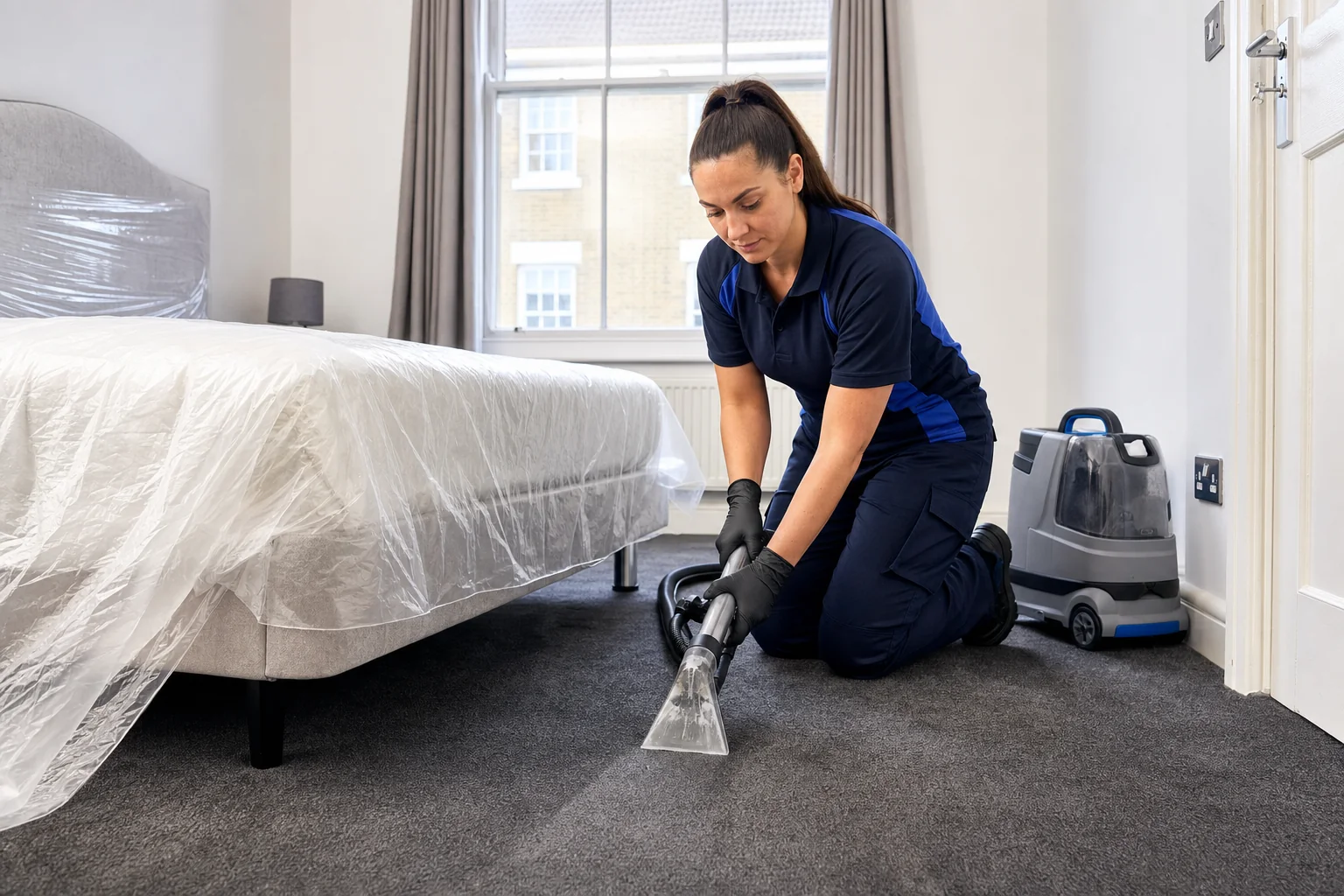
Direct answer: Products used earlier on a carpet can change how a new clean behaves. Residue may attract soil or foam, while unsuitable chemistry may alter dye, fibre or backing. Give the cleaner the names, amounts and timing of previous treatments so they can test and choose a compatible next step.
A clean-looking patch may still contain product
A stain spray can leave a small amount of residue even when its initial mark disappears. A powdered freshener can settle deep in pile, and a hired extraction machine may leave detergent if too much solution was used or too little was recovered. The carpet may feel normal at first, then darken as new soil sticks to the area. That does not prove which visit caused the problem; it shows why treatment history matters. The technician should inspect and, where useful, test the patch before assuming it is simply dirty again.
Ask the household what was applied, not only the person who booked the clean. A tenant, family member or previous owner may have treated the area. If the exact bottle is gone, describe its purpose and approximate date rather than inventing a product name. A photograph of an old label can help, but the cleaner should still treat uncertainty honestly. Repeatedly adding new chemistry to an unknown patch can create a more complex problem than the original spill.
Residue and rapid re-soiling
Some products contain surfactants intended to release soil during cleaning. If they are left behind in the pile, a sticky feel or renewed dark patch may appear after foot traffic. A cleaner may need to address that residue with a suitable controlled process, including removal of the released material. Simply spraying another deodoriser or detergent over it can add to the load. A useful question is how the proposed method will remove its own product from the carpet, not only how it will make the stain look lighter while wet.
WoolSafe's guidance for fine fibres cautions against washing-up liquid and products not intended for carpet because they can leave sticky residues. This is not a reason to assume every dark mark is detergent; oil from footwear, a new spill and pile wear can look similar. The timing and feel of the area help the professional investigate. A patch that returns after drying may need a different assessment from one that darkens only after a week of traffic.
Colour and fibre can be changed permanently
Bleach and some strong cleaners can remove or alter carpet dye. A pale patch will not regain its original colour through a normal rinse. Heat, solvents or abrasive powders can change fibre texture; an area may remain rough even when residue is removed. A cleaner should separate removable product from lasting damage before promising a result. A small test may reveal that a dark centre improves while a pale surrounding halo remains. That is useful information for deciding whether further treatment is worthwhile.
Do not try to even out colour with another chemical. An unmatched dye or strong stain remover can make the defect larger. If the main concern is lost colour or worn pile, a specialist repair or replacement discussion may be more relevant than repeated cleaning. The guide to stain removal limits explains how to distinguish these outcomes. The cleaner should be willing to say when treatment cannot restore material that is no longer intact.
Product combinations raise uncertainty
A second treatment may interact with residue from the first or change its movement during drying. Mixing household products can also be unsafe. Do not combine cleaners to 'boost' their strength, and never conceal earlier applications from the professional. State what was used, in what order, and whether the area was rinsed or dried between attempts. If a strong smell or irritation is present, follow the product's safety instructions and seek appropriate help rather than adding another substance to the carpet.
The technician may choose to pre-test colour stability and response to moisture in an unobtrusive place. A previous product may have been applied unevenly, so one test cannot guarantee that the whole marked area will behave alike. Controlled treatment with observation is safer than an automatic whole-room pass. A carpet with a vulnerable natural backing or weak seam may also limit how much rinsing can be used, even if residue is suspected.
Hired machines and old cleaning visits
If a rented machine was used, tell the cleaner which solution went into it, how many wet passes were made and whether the carpet took unusually long to dry. Excess water can move residues from backing to the surface or affect underlay. A later ring may involve wicking rather than new soil. If a previous professional clean caused a problem, provide the date, method if known and the sequence of appearance changes. A competent cleaner can assess the current condition without making assumptions about fault from the account alone.
An old treatment may also have been entirely suitable. Avoid blaming it for every later stain. The value of the history is that it narrows the questions: is there residue, colour loss, deep contamination or simply new traffic soil? The guide on why some stains come back after cleaning describes how timing can help distinguish these mechanisms. The right next action depends on evidence, not a default repeat clean.
Prepare an honest treatment record
The record can be short: date, substance, product, amount, method and what happened after drying. If the patch was treated only in its centre, say so. A cleaner may find that a darker ring is old residue at the perimeter while the middle has lost colour. That uneven history can explain why one test produces a different result from another a few centimetres away. It is also a reason to avoid judging the whole treatment from one tiny clear patch while the carpet is still damp.
If several rooms were treated with different products, separate their histories. A wool bedroom carpet and a synthetic hallway need not receive the same response even if the marks look alike. Keeping the details attached to the correct room prevents an avoidable assumption at the next visit. When in doubt, state that a product is unknown and allow the technician to test conservatively.
Write a short list of incidents and products before the appointment. Include a wide and close photograph in normal light, note any sticky feel or odour and say whether furniture covered the area while it dried. The carpet cleaning service can use that record to choose a proportionate assessment; the price guide gives starting costs for routine work. Ask what tests are planned and what result would make the cleaner stop rather than apply more chemistry.
After the new treatment, keep the aftercare instructions and record how the carpet looks when dry. If a mark returns, photograph it before using another product. A clear timeline allows a useful follow-up. The aim is not to reconstruct every chemical detail perfectly; it is to give the technician enough information to protect the remaining carpet while addressing the removable soil or residue.