
Synthetic Carpet Cleaning: Methods and Limitations
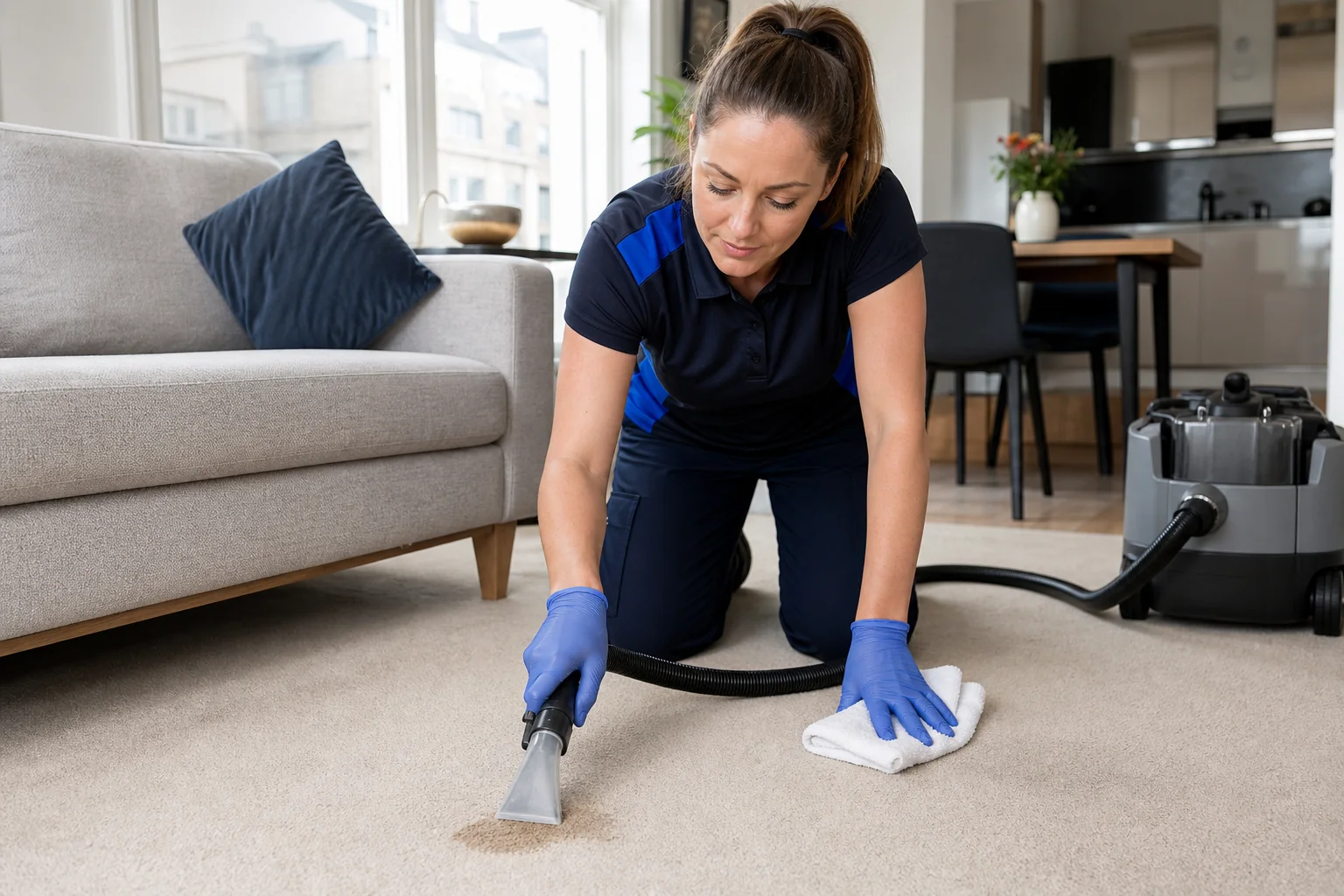
Direct answer: Synthetic carpet is not one uniform material. Nylon, polyester and polypropylene differ in soil behaviour, resilience and finishes, while backing and dye also affect the safe method. Professional cleaning can remove suitable soil, but it cannot restore worn yarn, lost colour or a failed backing.
Identify the actual fibre and construction
The word synthetic tells a cleaner less than the product label or retailer record. Nylon, polyester and polypropylene are common, and blends or special finishes add further differences. A carpet may also contain a natural or moisture-sensitive backing beneath its synthetic face. Ask for the manufacturer's care guidance if available and show the technician a spare sample or purchase information. They should inspect the carpet in its current condition rather than infer everything from a soft or shiny appearance.
Construction matters alongside chemistry. A tight loop can snag on a rotating brush; a long pile may trap dry soil and respond differently to agitation; a loose seam can limit treatment near a doorway. Colourfastness also cannot be assumed from fibre name alone. A printed pattern or contrasting border can behave differently from a plain area. A small test helps the technician assess the proposed product and method before applying them widely, though it is not a guarantee for every part of the room.
Nylon: resilience does not make damage impossible
Nylon is often selected for areas with traffic because many constructions retain appearance well, but the exact product and finish determine performance. Soil can still attach to oils, and repeated grit underfoot can abrade pile. A protective finish may have a maker-specific cleaning recommendation; an unsuitable strong product can compromise the intended behaviour. Ask how the cleaner will remove dry grit and treat oily traffic soil before assuming that a synthetic label makes any detergent acceptable.
A worn nylon path can look darker or lighter after cleaning because pile has compressed or its tips have abraded. The cleaner should distinguish that from removable soil. A suitable clean may brighten the route while leaving a visible difference from the protected carpet under furniture. More passes or aggressive brushing cannot rebuild the fibres. A pre-cleaning record helps both sides judge whether the result reflects treatment or earlier traffic.
Polyester and oily soil
Polyester carpets can show stains and traffic effects differently depending on construction. Some resist certain water-based spills yet hold oily soil that draws more dirt. A dark patch near a chair or doorway may therefore need a targeted assessment rather than a generic stain spray. The technician should ask about food, skincare, footwear and previous products, then choose a process that releases and removes residue without leaving a tacky area behind. Excess detergent can create rapid re-soiling even when the initial colour improves.
Pile resilience varies by product. A flattened polyester route may remain visible after soil removal; a bright protected patch beneath furniture may reflect less wear rather than a missed clean. Judge the dry carpet in similar light to its pre-treatment condition. A small test can show improvement in soil, but it cannot predict how every crushed tuft will look after normal walking resumes. An honest quote should explain this before the customer purchases a repeated treatment for permanent texture change.
Polypropylene: stain resistance is not soil resistance
Polypropylene may resist some water-based colourants, but oils and tracked-in dirt still matter. A pale carpet can look grey in an entrance route even if the fibre does not absorb a particular drink in the same way as another material. Vacuuming and entrance matting remain important to reduce abrasive grit. A cleaner should identify the product's construction and backing, then consider oily soil and any previous treatment residue. Do not treat 'stain resistant' as a promise that the carpet never needs care.
Heat is another reason to follow product guidance. Synthetic fibres and finishes can be affected by inappropriate high temperatures. A household iron, hairdryer aimed at a mark or untested heated remedy is not a safe shortcut. The professional method should keep temperature within the material and product instructions and manage moisture appropriately. If a previous accident produced a hard or shiny patch, it may be fibre change rather than soil that cleaning can remove.
The shared method decisions
All three fibre families benefit from removing dry soil before wet or chemical treatment. The Carpet and Rug Institute's residential cleaning standard treats inspection, vacuuming, compatible systems and drying as linked parts of maintenance. Ask the cleaner how much moisture enters the carpet, how soil and product will be recovered, and what ventilation or return-to-use advice applies. A rented machine used with too much product can leave residue irrespective of the fibre name.
The backing and installation can be the limiting factor. A weak seam, old adhesive or natural backing may not tolerate a method that the face yarn itself could handle. An earlier water leak or browning issue deserves attention before a general clean. If the carpet smells despite a clean-looking surface, ask whether the source is below the pile; a synthetic yarn does not prevent liquid from reaching underlay. The guide to identifying carpet fibre before cleaning explains where to find reliable material information.
Set the right scope for the job
Consider a room with different carpet sections or an inserted repair. A replacement patch may use a different batch, backing or even fibre from the original. Treating both as one uniform synthetic can produce an uneven result or conceal a vulnerable join. Point out the repair and ask whether it needs a separate test. Similarly, a darker border can contain a dye that responds differently from the main field. The service is more reliable when the technician examines each distinct part rather than treating the broad fibre label as a complete specification.
The cleaning interval should follow use. A synthetic carpet in a busy entrance may need soil removal more frequently than one in a spare bedroom, but the answer is not always a full wet clean. Regular vacuuming, mat maintenance and prompt spill response can reduce the load between professional visits. Ask the cleaner what maintenance step would most improve this carpet's appearance retention, and what signs would indicate that another professional treatment is due.
Tell the company which rooms are affected, where the traffic is heaviest, what spills occurred and what home products were used. A small wine mark and a whole hallway of oily soil may call for different work. The carpet cleaning service can assess the actual material and condition; the price guide helps frame the cost before a specific quote. Ask which stains have a realistic chance of improvement and which visible changes are wear.
After cleaning, allow the carpet to dry as instructed and check for sticky residue, new odour or unusual dampness. Compare appearance in the same light as before. Continue appropriate vacuuming rather than waiting for the path to turn grey. Synthetic fibre can be practical and durable, but it does not eliminate the need for material-specific care or turn every visible mark into removable dirt.